

Introduction
Savica Waterfall, also known as Slap Savica, is one of Slovenia’s most distinctive natural attractions. It lies near Lake Bohinj in the Julian Alps, within Triglav National Park. Surrounded by forested slopes and dramatic mountain scenery, the waterfall makes a rewarding stop for travelers exploring Slovenia’s alpine region.
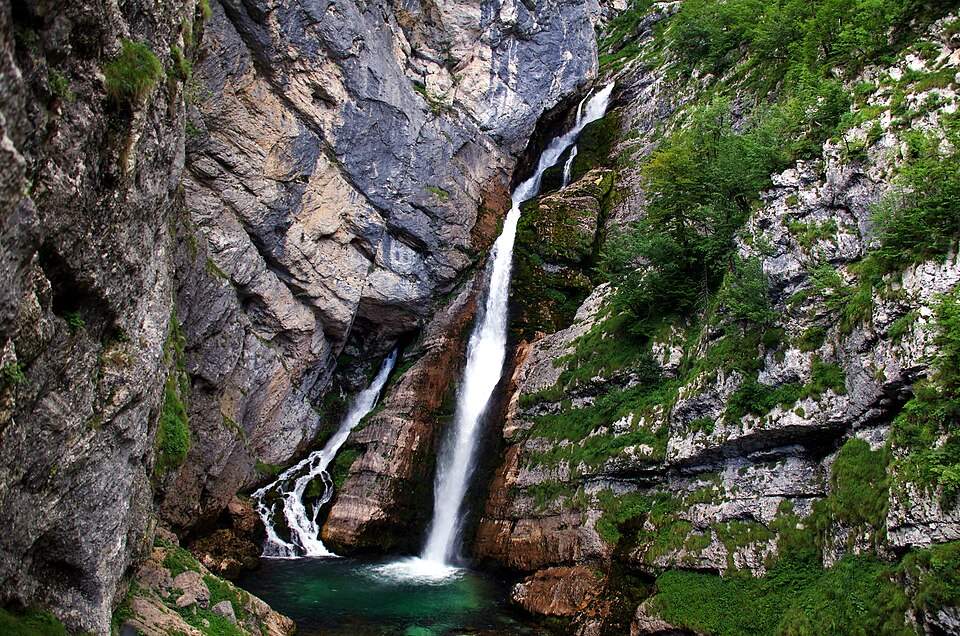
What makes Savica Waterfall special is its unusual shape. Water emerges from an underground karst system and drops into a rocky basin, forming a distinctive A-shaped cascade. This setting makes it an appealing destination for nature lovers, photographers, and visitors who want to experience Slovenia beyond its popular lakes and towns.
Savica Waterfall is a distinctive natural attraction near Lake Bohinj in Slovenia’s Julian Alps. The route to the viewpoint is short but steep, so it is best suited to visitors who are comfortable climbing stairs. If you are already exploring Bohinj, it is easy to combine with a lakeside walk or a stop in a nearby village.
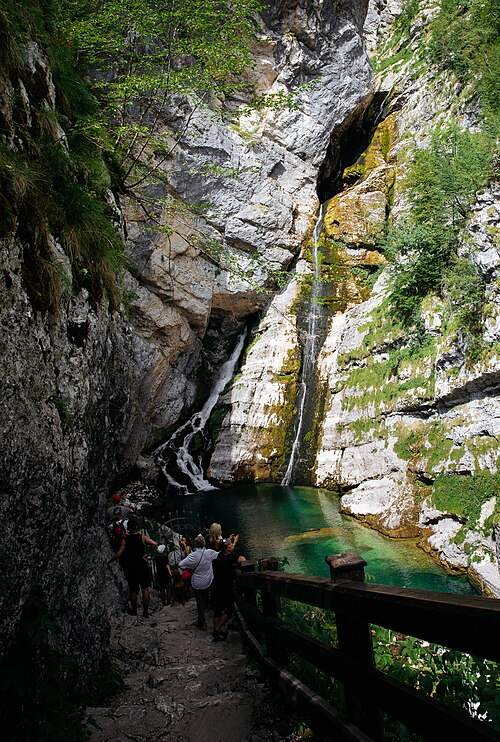
From the P9 parking area near Koča pri Savici, the marked route climbs 553 steps and usually takes 20–25 minutes uphill. The shortest official guided-walk listing gives a distance of about 1 km; treat this as an approximate route figure, not a surveyed measurement. Allow 60–80 minutes for the complete visit, including the return walk and time at the viewpoint. Visitors aged 16 and older pay €4 under the published 2026 admission rules, while parking is charged separately.
If you are planning a trip to Slovenia, Savica Waterfall is easy to combine with Lake Bohinj and other nearby alpine attractions. This guide covers how to reach the waterfall, what to expect on the trail, entrance fees, the best time to visit, and practical tips to help you plan your trip.
Savica Waterfall at a Glance
 Savica Waterfall (Slap Savica) is a popular natural attraction near Lake Bohinj in Slovenia’s Julian Alps. Here is the essential information to help you plan your visit.
| Visitor information | Details |
| Location | Ukanc, near Lake Bohinj, Slovenia |
| Nearest destination | Lake Bohinj; the nearest settlement is Ukanc |
| Waterfall height | 78 metres for the main waterfall |
| Approximate trail distance | About 1 km for the shortest listed walk; approximate route figure, not a surveyed measurement |
| Number of steps | 553 steps |
| Walking time | 20–25 minutes uphill; allow 60–80 minutes for the complete visit |
| Entrance fee | €4 for visitors aged 16+; children up to age 15 free; first Sunday of each month free for all |
| Parking | Paid parking at P9 near Koča pri Savici: €7 for up to 3 hours or €15 for a full day for vehicles up to 2 metres high |
| Best time to visit | Spring and autumn for seasonal scenery and water flow; summer for popular sightseeing |
| Accessibility | The steep, stepped trail is unsuitable for wheelchairs and strollers |
Visitor information, prices, transport, and access rules can change. The details below reflect official information available for 2026; confirm the current arrangements before setting out.
Important things to know before visiting
Admission and parking are separate charges. Under the published rules introduced on 1 August 2026, entry costs €4 for visitors aged 16 or older. Children up to and including age 15 enter free, as does everyone on the first Sunday of each month. Eligible Julian Alps Card holders and visitors with a recognized EU disability card are also listed as exempt.
The entrance point and access route close during heavy rain, storms, snowfall, black ice, high water, or when landslides and falling rocks pose a risk. Check the official visitor notice and weather forecast before setting out.
Where Is Savica Waterfall in Slovenia?
Savica Waterfall, also known as Slap Savica, is in northwestern Slovenia, near the western end of Lake Bohinj in the Julian Alps. It lies within Triglav National Park, Slovenia’s only national park, and is surrounded by forests, limestone mountains, and alpine scenery.
The waterfall is a convenient stop for travelers exploring the Bohinj region. You can visit it as a short excursion from Lake Bohinj or combine it with a longer day trip through Slovenia’s Julian Alps.
Location Within Triglav National Park
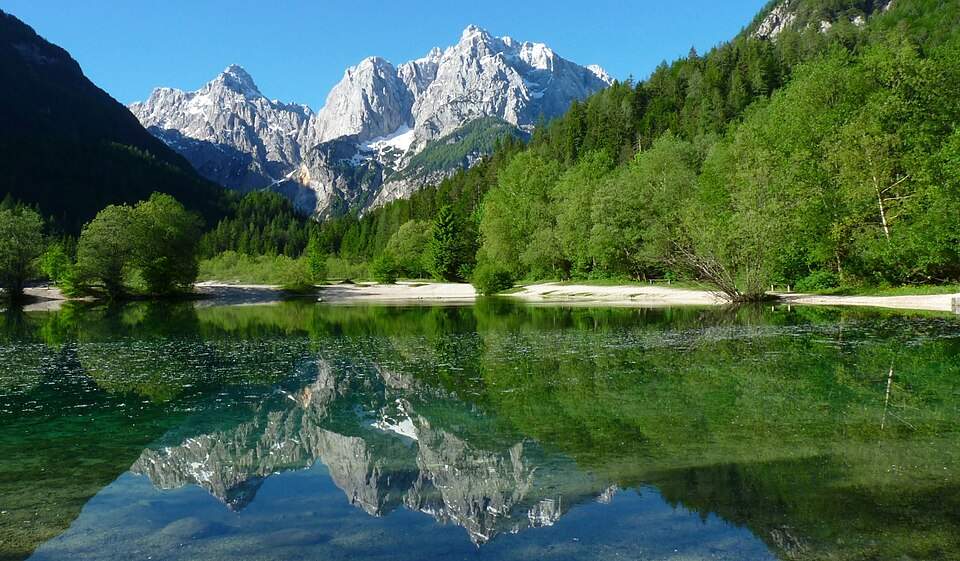 Savica Waterfall sits above the settlement of Ukanc, close to the southwestern end of Lake Bohinj. The surrounding landscape forms part of Triglav National Park, which protects the Julian Alps’ mountain scenery, forests, rivers, lakes, and other natural habitats.
The waterfall is especially notable for its unusual A-shaped cascade. Water emerges from an underground karst system and plunges into a rocky basin below the cliff. Its distinctive formation and accessible viewing point make it one of the region’s best-known natural attractions.
Because the waterfall is inside a protected national park, visitors should stay on marked paths, follow local instructions, and avoid disturbing the surrounding environment.
Distance from Lake Bohinj, Lake Bled, and Ljubljana
Savica Waterfall is easiest to visit from Lake Bohinj, although it can also be reached from Lake Bled or Ljubljana. Travel times depend on traffic, road conditions, and the season.
| Starting point | Approximate distance | Typical driving time |
| Lake Bohinj (Ribčev Laz) | 9 km to the waterfall parking area | 15 minutes |
| Lake Bled | Around 35–40 km | Approximately 45–60 minutes |
| Ljubljana | Around 90 km | Approximately 1 hour 30 minutes |
Distances and journey times are approximate. Traffic, seasonal road restrictions, and the precise starting point can affect travel time.
Lake Bohinj is the most convenient base for visiting Savica Waterfall. If you are staying in Ribčev Laz, you can drive to the parking area near Koča pri Savici or use seasonal public transport. Visitors starting from Ljubljana can also include the waterfall in a full-day excursion to Lake Bohinj and Lake Bled.
Savica Waterfall Map and Trailhead Location
The waterfall is located above the western end of Lake Bohinj, near Ukanc. The road continues to the parking area beside Koča pri Savici, which serves as the main starting point for the walk.
From the P9 parking area beside Koča pri Savici, follow the signed uphill path through the forest. The marked approach has 553 steps and usually takes 20–25 minutes uphill. Local destination information lists the shortest walk at about 1 km, but treat that as an approximate route length rather than a surveyed measurement.
When planning your route, search for Savica Waterfall (Slap Savica), Ukanc, Slovenia in your navigation app. Make sure your directions lead to the parking area near Koča pri Savici, rather than simply to Lake Bohinj.
Visitors arriving by bus should check the seasonal timetable and confirm that the service reaches the waterfall parking area. Buses to Ukanc operate more regularly than the seasonal service to the waterfall trailhead.
Why Visit Savica Waterfall?
Savica Waterfall is worth visiting for its unusual geological formation, distinctive A-shaped cascade, and location in Slovenia’s Julian Alps. Unlike many waterfalls that flow openly down a mountainside, Savica emerges from an underground karst system before plunging over a rocky cliff. Its distinctive shape and accessible viewing point make it a memorable stop near Lake Bohinj.
What Makes the Waterfall Unique?
The most distinctive feature of Savica Waterfall is the way its water emerges from inside the mountain. The surrounding limestone landscape contains a network of underground passages through which water travels before reaching the surface.
This karst system gives the waterfall its unusual structure. Instead of forming a single, broad curtain of water, Savica divides into two visible streams that create an A-shaped cascade. The water then falls into a natural rocky basin below.
Savica is also connected to the wider water system of the Julian Alps. Water from the surrounding highlands feeds underground channels before emerging at the waterfall. This connection between the mountain’s geology and its flowing water makes Savica particularly interesting to visitors who enjoy natural landscapes.
The Waterfall’s Height and Distinctive Shape
Savica Waterfall has a main drop of approximately 78 metres. Its defining feature is the two-part cascade, which resembles the letter A when viewed from the designated viewpoint.
The upper watercourse divides into two branches before plunging down the steep rock face. The shape results from the way water emerges through the mountain’s karst passages and flows over the exposed limestone.
Water flow can vary throughout the year. Rainfall, snowmelt, and seasonal conditions affect the amount of water reaching the waterfall. During periods of stronger flow, the two branches can appear more powerful, while drier conditions may produce a narrower cascade.
The viewing platform provides a clear perspective of the waterfall without requiring visitors to undertake a long mountain hike. However, reaching it involves climbing a substantial number of steps.
The Natural Surroundings of the Julian Alps
Savica Waterfall lies within Triglav National Park, near the western end of Lake Bohinj. The surrounding landscape combines steep limestone slopes, dense forest, and the mountain scenery of the Julian Alps.
The setting makes the waterfall a natural addition to a visit to the Bohinj region. Travelers can explore the waterfall in the morning and spend the rest of the day beside Lake Bohinj, walking through nearby villages or visiting other attractions in the national park.
The surrounding forest also gives the approach a different character from the open lakeside scenery. The uphill path passes through wooded terrain before reaching the viewing area, where the waterfall emerges from the rock face.
For visitors interested in geology, mountain landscapes, and short nature walks, Savica offers more than a scenic photo opportunity. Its underground water source, distinctive cascade, and location near Lake Bohinj make it one of the most recognizable natural attractions in this part of Slovenia.
How to Get to Savica Waterfall
Savica Waterfall is located near the western end of Lake Bohinj, close to the settlement of Ukanc in northwestern Slovenia. The easiest way to reach it is by car, although seasonal public transport and walking routes from the Bohinj area provide alternatives.
The final approach leads to the parking area near Koča pri Savici. From there, visitors must walk uphill along a marked trail to reach the waterfall viewpoint. You cannot drive directly to the waterfall.
Getting There by Car
Driving is the most convenient way to reach Savica Waterfall, especially if you want to explore other attractions around Lake Bohinj on the same day.
From Ribčev Laz, follow the road along the southern shore of Lake Bohinj toward Ukanc. Continue west through the village and follow the signs for Savica Waterfall and Koča pri Savici. The road ends near the designated parking area, where you can leave your vehicle before beginning the walk.
The drive from Ribčev Laz generally takes around 15–20 minutes, depending on traffic and your starting point. Once parked, allow another 20–25 minutes to walk uphill to the waterfall viewpoint.
Parking is paid, and charges may vary by vehicle type and parking duration. During busy summer weekends and holidays, spaces can fill up, so arriving earlier in the day is advisable.
Important: Check local road conditions before travelling, particularly in winter or during periods of heavy snowfall. Follow designated parking instructions rather than stopping along narrow roads.
Visiting Savica Waterfall by Bus
Public transport can be an option for travelers staying around Lake Bohinj, but services to the waterfall trailhead may be seasonal.
As of 15 October 2026, Promet Bohinj lists organised Line 9 as operating daily through 1 November 2026 and serving Savica Waterfall. This is different from the regular summer bus service to the waterfall, which was listed as running through 31 August. Check the current timetable, exact stop, ticket type, fare, and last return connection before travelling.
If the bus stops in Ukanc rather than at the parking area, you may need to walk the remaining distance. This can add considerably to your journey, so check the route carefully before setting out.
Public transport is best suited to visitors who have flexible schedules and are comfortable planning around limited services. If you are visiting outside the main tourist season, do not assume a direct bus will be available.
Walking from Lake Bohinj or Ukanc
Walking is an option if you are staying near Lake Bohinj and want to explore the area without a car. However, the distance depends on your starting point.
From the Hotel Zlatorog area in Ukanc, the marked footpath takes approximately one hour to reach the parking area below Savica Waterfall. From there, you must climb the additional steps to reach the waterfall viewpoint.
Walking from Ribčev Laz, at the eastern end of Lake Bohinj, is a much longer journey. Allow around two and a half hours each way, depending on your pace and the route conditions.
If you choose to walk, wear comfortable hiking shoes and carry drinking water. Check the weather before leaving, especially if you plan to return on foot later in the day.
Walking is best for visitors who enjoy longer hikes and have sufficient time. If your main goal is simply to see the waterfall, taking a bus or driving closer to the trailhead will save considerable time.
Getting There from Lake Bled
Lake Bled is a convenient starting point for a day trip to Savica Waterfall. The drive typically takes around 45–60 minutes, covering approximately 35–40 km, depending on your route and traffic.
From Bled, follow the road toward Bohinjska Bistrica and continue to Ribčev Laz. From there, drive along the southern shore of Lake Bohinj toward Ukanc, following signs for Savica Waterfall.
You can combine the waterfall with time beside Lake Bohinj, making this a worthwhile day trip for travelers who want to explore more of Slovenia’s alpine scenery.
If you are relying on public transport, take a bus toward Bohinj and check the connections to Ukanc or the waterfall parking area. Direct services to the waterfall may be seasonal, so confirm the timetable before planning your return journey.
Getting There from Ljubljana
Ljubljana is approximately 90 km from Savica Waterfall. Driving generally takes around 1 hour 30 minutes to 2 hours, depending on traffic and road conditions.
From Ljubljana, travel toward Škofja Loka or take the main route toward Bled and Bohinjska Bistrica, depending on your navigation directions. Continue toward Ribčev Laz, follow the southern shore of Lake Bohinj, and proceed to the parking area near Koča pri Savici.
A day trip from Ljubljana is possible, but allow enough time for the drive, the uphill walk, and other stops. Leaving early will give you more flexibility to explore Lake Bohinj without rushing.
Travelers without a car can take a bus from Ljubljana toward Bohinj, usually via Bled and Bohinjska Bistrica. From there, connections to Ukanc or Savica Waterfall depend on the season and the current timetable.
Travel tip: During the busy summer season, parking near Savica Waterfall can be limited. Consider public transport when available, and check the latest service information before departure. In autumn and winter, verify opening hours and trail access because severe weather, ice, or falling-rock risks can lead to temporary closures.
Where to Stay Near Savica Waterfall
Choosing the right base can make visiting Savica Waterfall and exploring Slovenia’s Julian Alps much easier. Lake Bohinj is the most convenient overall area for this trip, but the best place to stay depends on your budget, transport, and whether you prefer a quiet lakeside setting or a larger choice of accommodation.
Ukanc — Best for Staying Close to Savica Waterfall
Ukanc is a small settlement near the western end of Lake Bohinj, making it one of the most convenient places to stay if Savica Waterfall is a priority. The waterfall access road begins nearby, so you can reach the parking area without travelling across the entire lake.
Ukanc is a good choice for travelers who enjoy peaceful surroundings, mountain scenery, and access to outdoor activities. It also provides a convenient starting point for exploring the western lakeshore and taking the Vogel Cable Car when it operates.
Accommodation options are more limited than in larger tourist centres, and restaurants and shops are less numerous. Booking ahead is advisable during the summer season.
Best for: Nature lovers, hikers, couples, and visitors who want to stay close to the waterfall.
Ribčev Laz — Best for First-Time Visitors
Ribčev Laz is located at the eastern end of Lake Bohinj and is one of the most practical bases for first-time visitors. It offers convenient access to the lake, restaurants, accommodation, and transport connections around the Bohinj region.
You can enjoy lakeside walks, visit the Church of St. John the Baptist, and arrange trips to Savica Waterfall and other nearby attractions. The settlement is also a useful base if you plan to explore Bohinj over several days rather than visit only the waterfall.
Reaching Savica Waterfall from Ribčev Laz requires a drive or suitable public transport connection. However, the wider choice of visitor services makes this area a convenient option for many travelers.
Best for: First-time visitors, couples, families, and travelers who want easy access to restaurants and lakeside activities.
Bohinjska Bistrica — Best for Budget-Friendly Accommodation and Transport
Bohinjska Bistrica is a larger settlement in the Bohinj region, away from the immediate lakeshore. It is worth considering if accommodation near Lake Bohinj is expensive or fully booked.
The town offers transport connections, shops, restaurants, and other everyday services. It can also be a practical base for travelers who want to explore several parts of the region by bus or car.
The main drawback is that you will need additional travel time to reach Lake Bohinj and Savica Waterfall. Accommodation prices also vary by season, so Bohinjska Bistrica is not automatically cheaper than the lakeside settlements.
Best for: Budget-conscious travelers, visitors using public transport, and people planning a longer stay in the Bohinj area.
Lake Bled — Best for a Wider Choice of Accommodation
Lake Bled is an alternative base if you want a wider selection of hotels, guesthouses, restaurants, and visitor activities. It is a well-established tourist destination with its own attractions, including Bled Castle, the lakeside promenade, and traditional boat trips to Bled Island.
Savica Waterfall is approximately 35–40 km away by road, so expect around 45–60 minutes of driving in typical conditions. This makes a visit possible as a day trip, although staying in Bled means more travel time than staying around Lake Bohinj.
Bled is a good choice if you want to explore several Slovenian destinations from one base. However, if your main priority is Savica Waterfall and the Bohinj region, staying closer to Lake Bohinj is generally more convenient.
Best for: Travelers seeking a broader choice of accommodation, first-time visitors to Slovenia, and people combining Lake Bled with the Bohinj region.
Which Area Should You Choose?
| Area | Best reason to stay | Main consideration |
| Ukanc | Closest to Savica Waterfall | Limited accommodation and services |
| Ribčev Laz | Convenient lakeside base | Travel required to reach the waterfall |
| Bohinjska Bistrica | Practical transport and everyday services | Farther from the lake |
| Lake Bled | More accommodation and tourist activities | Longer journey to Savica Waterfall |
Our recommendation: Choose Ribčev Laz for the best overall balance of accommodation, dining, lakeside activities, and access to the Bohinj region. Choose Ukanc if proximity and a quieter setting matter most. If you are staying in Lake Bled, plan Savica Waterfall as part of a full-day trip rather than a quick stop.
Savica Waterfall Hike: Distance, Steps, and Difficulty
The Savica Waterfall hike is a short uphill walk through a forested section of Slovenia’s Julian Alps. It leads from the parking area near Koča pri Savici to a viewing platform overlooking the waterfall. Although the route is relatively short, the many steps make it more demanding than a casual, flat nature walk.
Most visitors reach the viewpoint in approximately 20–25 minutes, depending on pace and fitness. Allow around 60–80 minutes for the complete visit, including the ascent, time at the viewpoint, and return walk. Add extra time during busy periods or if you need frequent breaks.
Where Does the Hike Start?
The walk starts at the P9 parking area near Koča pri Savici, at the western end of Lake Bohinj. Park in a designated space, pay the separate parking charge, and follow signs to the entrance. The official visitor information gives the stair count and walking time but does not state a surveyed trail distance. The official Bohinj guided-walk listing describes the shortest walk from the parking area as about 1 km, so use that as an approximate total route length rather than a guaranteed GPS measurement.
The route climbs through woodland along a constructed path with steps. As you gain elevation, the forest opens in places, eventually leading to the viewing area where you can see the waterfall descending from the limestone cliff.
There is no road access directly to the waterfall viewpoint. All visitors must complete the final section on foot, so allow enough time for the climb before planning other activities around Lake Bohinj.
How Many Steps Are There to Savica Waterfall?
The trail to Savica Waterfall has 553 steps. These steps form a substantial part of the uphill route from the parking area to the viewing platform.
Although the staircase makes the route easier to follow, the continuous climb can be tiring. Visitors should expect to pause for a rest if needed, particularly on warm days or when carrying a backpack.
The steps also explain why this short walk may feel more demanding than its distance suggests. Wear shoes with good grip, take your time on the ascent, and be careful when the steps are wet.
How Long Does the Walk Take?
The uphill walk from the parking area to the waterfall viewpoint takes approximately 20–25 minutes for many visitors. Your pace, fitness level, crowding, and trail conditions affect the time. The shortest official guided-walk listing gives a distance of about 1 km, although this is an approximate route figure.
Allow around 60–80 minutes for the overall visit, including the uphill walk, time at the viewpoint, and descent. Add more time during busy periods or if you need frequent breaks.
If you plan to walk from Ukanc instead of driving to the trailhead, allow considerably more time. The official Bohinj destination guide estimates about an hour to reach the parking area from the Hotel Zlatorog area on foot. You must then complete the stepped trail to the waterfall.
Is the Savica Waterfall Hike Difficult?
The walk is short, but the staircase makes it more strenuous than a flat nature path. Visitors who are comfortable climbing stairs can usually manage it in suitable conditions; the route may be difficult for people with limited stamina, balance, or mobility.
You do not need advanced hiking skills to follow the marked route in suitable conditions. However, the continuous ascent requires reasonable mobility and enough stamina to climb stairs.
For a more comfortable visit:
- Wear walking shoes with good grip.
- Carry drinking water, especially during summer.
- Take breaks whenever necessary.
- Watch your footing on wet or slippery steps.
- Check for closures after heavy rain, snowfall, or icy weather.
The route is generally manageable for visitors who are comfortable climbing stairs. People with limited mobility or conditions that make stair climbing difficult should assess the route carefully before visiting.
Is the Trail Suitable for Children and Older Visitors?
Children who can walk independently and manage stairs may enjoy the visit, provided an adult supervises them throughout the climb. The route is short, but the number of steps can be tiring for younger children.
Older visitors who are comfortable with sustained stair climbing may also complete the walk. However, age alone does not determine suitability. Balance, mobility, fitness, and the condition of the steps are more important considerations.
Take frequent breaks if needed, and avoid rushing during the descent. Wet surfaces can increase the risk of slipping.
If you are visiting with young children or older family members, consider their ability to manage 553 steps before setting out. There is no step-free route to the waterfall viewpoint.
Can You Visit Savica Waterfall with a Stroller or Wheelchair?
No. The trail to Savica Waterfall is not suitable for wheelchairs or strollers. The route includes a long staircase and does not provide step-free access to the viewing platform.
You can drive to the parking area near Koča pri Savici, but reaching the waterfall itself requires climbing the steps on foot. There is no alternative accessible route to the main viewpoint.
If you are travelling with a wheelchair user or a child in a stroller, you can still enjoy the wider Lake Bohinj region by choosing accessible lakeside locations and checking individual attractions before visiting.
Official visitor guidance also warns that access may be closed during severe weather, icy conditions, high water, or when falling rocks pose a risk. Check current conditions before travelling.
Savica Waterfall Entrance Fee, Opening Hours, and Parking
Planning your visit to Savica Waterfall is straightforward, but you should budget separately for admission and parking. The visitor-management system changed on August 1, 2026, so older travel guides may show outdated fees or arrangements.
The following details reflect the published official information for 2026.
How Much Does It Cost to Visit Savica Waterfall?
The published admission fee is €4 for each visitor aged 16 or older. Children up to and including age 15 enter free. Admission is also free for everyone on the first Sunday of each month. The official destination page additionally lists holders of a recognized EU disability card as free and eligible Julian Alps Card holders as included in the card price. Confirm card conditions before arrival.
| Visitor category | Admission fee |
| Adults and visitors aged 16 or older | €4 |
| Children aged 15 and younger | Free |
| All visitors on the first Sunday of each month | Free |
| Eligible holders of the Julian Alps Card | Included in the card price |
The admission fee was reintroduced on 1 August 2026 under a stewardship arrangement involving Triglav National Park, Tourism Bohinj, and the Municipality of Bohinj. The stated purpose is to support nature protection, trail maintenance, visitor safety, and management of the surrounding area. Admission and parking are separate charges, and a free-entry category does not override a weather-related closure.
What Are the Opening Hours?
Savica Waterfall’s published 2026 opening-hours schedule lists the following times for August through December. Although the page describes the schedule as applying during 2026, it does not display monthly hours for January through July. Do not infer those missing hours; check directly if travelling during that period.
| Month | Opening hours |
| August | 8:00 a.m.–7:00 p.m. |
| September | 8:00 a.m.–7:00 p.m. |
| October | 9:00 a.m.–5:00 p.m. |
| November | 9:00 a.m.–4:00 p.m. |
| December | 9:00 a.m.–4:00 p.m. |
Hours are subject to change, and the entrance may close temporarily during heavy rain, storms, snowfall, black ice, high water, or when landslides and falling rocks pose a risk.
Arrive with enough time to complete the uphill walk and return before closing. In autumn and winter, check the forecast and local access information on the day of your visit.
Where Can You Park Near Savica Waterfall?
The main parking area is P9 Savica Waterfall, near Koča pri Savici. It is located at the starting point of the walking trail, so you can leave your vehicle there before climbing the steps to the waterfall.
The published P9 parking rates are €7 for up to three hours and €15 all day for vehicles up to 2 metres high. Vehicles over 2 metres are listed at €25 for up to three hours or €50 all day. The first 15 minutes are free. The car park uses barriers and the published parking information specifies cashless payment by card. Check the signs for current conditions.
| Vehicle type | Parking duration | Fee |
| Vehicles up to 2 metres high | Up to 15 minutes | Free |
| Vehicles up to 2 metres high | Up to 3 hours | €7 |
| Vehicles up to 2 metres high | All day | €15 |
| Vehicles over 2 metres high | Up to 3 hours | €25 |
| Vehicles over 2 metres high | All day | €50 |
The P9 car park uses barriers, and the published parking information specifies card-only payment. Rates depend on vehicle height and duration. During the 2026 summer restriction period (1 July–31 August), campervan parking at P9 and driving on the Ukanc–Savica Waterfall road were prohibited according to Promet Bohinj. Check the current rules for taller vehicles and do not assume overnight parking is permitted.
During busy periods, parking spaces may be limited. If P9 is full, use only a designated alternative car park and continue by a currently operating public-transport service where available. Do not park on road verges or outside marked bays.
Is Parking Included in the Entrance Fee?
No. Parking is charged separately from the waterfall entrance fee. The €4 admission charge covers entry to the waterfall, while parking fees depend on your vehicle and the length of your stay.
For example, an adult visiting by car for up to three hours should budget approximately €11 in total: €4 for admission and €7 for parking. This excludes fuel and any other travel expenses.
If you are visiting with family, remember that children aged 15 and younger enter free, but the vehicle parking charge still applies.
Can You Visit Savica Waterfall for Free?
Yes, under certain conditions. Admission is free for everyone on the first Sunday of each month. Children aged 15 and younger also enter free on other days. Eligible Julian Alps Card holders have admission included in their card price.
However, free admission does not mean free parking. If you drive to P9, you will normally need to pay the applicable parking charge unless a specific exemption applies.
Visitors should also remember that free admission does not guarantee access during adverse weather. The entrance can close temporarily when conditions make the trail unsafe.
Travel tip: Before leaving for Savica Waterfall, check the current opening hours, parking availability, and weather conditions. These details can change, especially outside the main summer season.
Best Time to Visit Savica Waterfall
The best time to visit Savica Waterfall depends on the scenery you prefer, the amount of water flowing over the cascade, and the weather conditions. May to September is generally a convenient period for visiting, while spring snowmelt and autumn rainfall can influence water flow.
Slovenia experiences four distinct seasons. Spring runs from March to May, summer from June to August, autumn from September to November, and winter from December to February. Conditions in the Julian Alps can change quickly, so check the local forecast before travelling.
Visiting in Spring (March to May)
Spring is an appealing time to visit Savica Waterfall, particularly as snow begins to melt in the Julian Alps. Snowmelt and seasonal rainfall can increase water flow through the underground karst system.
The surrounding forests become greener, and the mountain scenery offers attractive views. Visitor numbers may also be lower than during the main summer holiday period.
March and early April can still bring cold weather, snow, or icy conditions. By May, conditions are often more suitable for walking, although rain can make the steps slippery.
Best for: Visitors who enjoy fresh mountain scenery and want to explore outside the busiest summer months.
Visiting in Summer (June to August)
Summer is the main tourist season around Lake Bohinj. Longer daylight hours make it easier to combine Savica Waterfall with lakeside walks, mountain viewpoints, and other attractions in Triglav National Park.
June, July, and August are generally convenient months for sightseeing. However, July and August can be particularly busy, especially on sunny weekends and during school holidays.
The forested trail provides some shade, but climbing the steps can feel strenuous in warm weather. Arrive early to improve your chances of finding parking and enjoying a quieter visit.
Water flow can vary during summer. A dry spell may reduce the volume of water, so strong flow should not be assumed simply because it is summer.
Best for: First-time visitors, families whose children can manage the stairs, and travelers planning a full day around Lake Bohinj.
Visiting in Autumn (September to November)
Autumn brings colourful foliage to the forests around Savica Waterfall. September often retains relatively mild conditions, while October and November become progressively cooler.
September and early October can be particularly appealing for photography and quieter sightseeing. Rainfall may increase during autumn, but the waterfall’s flow still depends on recent weather and conditions within the karst system.
As the season progresses, wet leaves, rain, and colder temperatures can make the steps slippery. Daylight hours also become shorter, and visitor opening hours may be reduced.
Best for: Photographers, autumn-colour enthusiasts, and travelers seeking a quieter alternative to peak summer.
Visiting in Winter (December to February)
Winter brings cold weather and occasional snowfall to the Bohinj region. The Julian Alps can look spectacular under snow, but visiting Savica Waterfall requires greater caution.
December, January, and February can bring icy steps, snow-covered paths, and freezing temperatures. The entrance may close when conditions become unsafe because of ice, heavy snowfall, high water, storms, or falling-rock risks.
Even if the waterfall is open, wear suitable footwear and check local access information before setting out. Do not attempt the walk if the staircase is icy or unsafe.
Best for: Travelers who enjoy winter landscapes and can adapt their plans to changing mountain conditions.
Best Time of Day to Avoid Crowds
For a quieter visit, aim to arrive shortly after the entrance opens. Early mornings are especially useful during July and August, when Lake Bohinj attracts many summer visitors.
Late afternoon may also be quieter, but make sure you have enough time to complete the walk and return before closing. During October, November, and winter, shorter opening hours make this particularly important.
Weekdays can be less crowded than sunny weekends, although school holidays and local events may affect visitor numbers.
Travel tip: For a balance of comfortable walking conditions and fewer peak-season crowds, consider May, June, or September. Regardless of the month, check the weather, opening hours, and trail conditions before travelling.
Savica Waterfall by Season: Quick Comparison
| Season | Months in Slovenia | Main advantage | What to consider |
| Spring | March–May | Snowmelt, fresh greenery | Cold weather and slippery steps early in the season |
| Summer | June–August | Longer days and convenient sightseeing | Peak crowds, warmer weather, possible dry spells |
| Autumn | September–November | Colourful forests and potentially fewer visitors | Rain, shorter days, reduced opening hours |
| Winter | December–February | Snow-covered alpine scenery | Ice, snow, and possible trail closures |
Rules, Safety, and What to Know Before Visiting Savica Waterfall
A little preparation can make your visit to Savica Waterfall more comfortable. Although the walk is relatively short, the route includes 553 steps, and weather conditions in the Julian Alps can change quickly. Wear suitable footwear, check access conditions, and plan food, toilets, and transport before setting out.
What Shoes and Clothing Should You Wear?
Wear comfortable walking shoes or lightweight hiking shoes with good grip. The path includes many steps, which can become slippery after rain or during colder weather. Flip-flops, smooth-soled shoes, and other footwear with poor traction are not suitable.
Your clothing should reflect the season. From June to August, lightweight, breathable clothing is generally comfortable, but bring a light rain jacket in case of showers. From March to May and September to November, layers help you adapt to changing temperatures. Between December and February, warm clothing and suitable winter footwear may be necessary if the route is open.
A small backpack is useful for carrying water, a phone, and any personal essentials. Avoid carrying bulky bags that make climbing or descending the stairs more difficult.
Is Swimming Allowed at Savica Waterfall?
Savica Waterfall is primarily a sightseeing destination, and visitors should not plan to swim at the waterfall or enter the water basin. The viewing area is intended for observing the cascade, not for swimming or accessing the water.
The waterfall drops into a rocky basin, and the surrounding terrain can be steep and slippery. Water conditions may also change after rainfall. Stay behind designated barriers and follow posted instructions.
If you want to swim during summer, consider designated swimming areas around Lake Bohinj instead. Check local rules and water conditions before entering the lake.
Are Dogs Allowed on the Trail?
Yes, dogs are allowed on the trail to Savica Waterfall. However, dogs must remain on a leash throughout the visit to protect wildlife, keep other visitors safe, and preserve the natural environment.
The stepped path can be challenging for some dogs, particularly small dogs, older pets, or animals that are not accustomed to climbing stairs. Keep your dog close to you, especially when the steps are wet or crowded.
Bring drinking water for your pet and clean up after it. Do not allow your dog to disturb wildlife or leave the marked path. There is no additional admission charge for dogs.
If your dog struggles with stairs or uneven surfaces, consider exploring the more accessible walking areas around Lake Bohinj instead.
Are Food and Toilets Available Nearby?
Yes. A mountain hut near the Savica Waterfall parking area offers refreshments and snacks. This is a convenient place to take a break before or after the walk.
However, the mountain hut closes during the winter months. Basic snacks and drinks may still be available at the waterfall entrance, but facilities and availability can vary.
If you plan to visit during winter or outside the main tourist season, bring water and a small snack rather than relying entirely on on-site services. It is also sensible to use toilet facilities before starting the uphill walk, as you should not assume that toilets will be available along the trail.
For a longer day around Lake Bohinj, you can find additional places to eat in nearby settlements. Check opening hours in advance, particularly during quieter months.
Visitor Rules and Safety Precautions
- Stay on the marked path and use the designated viewing area. Do not climb over barriers, enter restricted areas, or try to reach the base of the waterfall.
- Swimming is not allowed at Savica Waterfall. If you want to swim in summer, use permitted areas around Lake Bohinj and follow local signs and water-safety advice.
- Keep dogs on a leash throughout the visit. The local visitor information permits dogs on the route without a separate admission fee, but check public-transport rules if travelling with a pet.
- Take all rubbish with you, avoid disturbing wildlife or damaging plants and rock formations, and remain on marked paths within Triglav National Park.
- Use designated parking spaces only. Do not park on verges, grass, or outside marked bays, and never block access roads or emergency routes. Parking is charged separately from admission.
- Do not assume overnight parking or camping is permitted at P9. Vehicle restrictions can change; in summer 2026, campervan parking at P9 and driving on the Ukanc–Savica Waterfall road were prohibited from 1 July to 31 August.
- Wear footwear with good grip and take care on the descent. Wet leaves, moss, frost, rain, and ice can make the steps slippery. Supervise children closely, especially on stairs and near the viewing area.
- The entrance and route can close during heavy rain, storms, snowfall, black ice, high water, landslide risk, or falling-rock danger. Respect closure notices and staff instructions; do not bypass a barrier.
- Check the local weather, access notice, opening hours, parking conditions, and transport timetable before leaving. If the route is closed or icy, postpone the visit rather than risking an unsafe climb.
Best Places to Visit Near Savica Waterfall
Savica Waterfall is a useful stop on a wider Lake Bohinj itinerary. The best nearby additions depend on how much time you have: the lake, Ukanc, and Ribčev Laz are easy to combine, while Mostnica Gorge and Voje Valley require a separate trip to their trailhead.
If you have only a few hours, combine Savica with a lakeside stop. With a full day, choose either Vogel or Mostnica Gorge and Voje Valley after checking current operating status and trail conditions.
Lake Bohinj
Lake Bohinj is the most natural place to combine with Savica Waterfall. Located in the heart of Triglav National Park, it is Slovenia’s largest natural permanent lake and is surrounded by the dramatic peaks of the Julian Alps.
You can enjoy lakeside walks, photograph the mountain reflections, relax by the shore, or explore the small settlements around the lake. In warmer months, designated areas offer opportunities for swimming and other water activities, subject to local rules.
The waterfall lies near the western end of the lake, while Ribčev Laz and the famous stone bridge are near its eastern end. This makes it easy to visit both places on the same day by car or with suitable local transport.
Time needed: Allow 1–3 hours for a relaxed visit to the lake, depending on whether you want a short walk or additional activities.
Mostnica Gorge
Mostnica Gorge is another appealing natural attraction in the Bohinj region. The Mostnica River flows through a narrow limestone gorge, creating clear pools, sculpted rock formations, and small waterfalls along the walking route.
The trail starts near Stara Fužina and passes through woodland and alpine scenery. It is a good choice for travelers who enjoy walking and want to see a different side of Bohinj’s landscape after visiting Savica Waterfall.
However, Mostnica Gorge is not directly beside the Savica trailhead. You will need to travel to the starting point near Stara Fužina and allow additional time for the walk. Trail access and fees may vary by season.
Time needed: Allow around 2–3 hours for a typical visit, depending on your route and walking pace.
Vogel Cable Car
The Vogel Cable Car is an excellent option if you want to see Lake Bohinj and the Julian Alps from above. The lower station is near Ukanc, on the southern side of the lake, making it a practical addition to a visit to Savica Waterfall.
The cable car takes visitors to a mountain viewpoint at approximately 1,535 metres above sea level. From the upper station, you can enjoy panoramic views across Lake Bohinj, the surrounding mountains, and Triglav, Slovenia’s highest peak.
During the warmer months, Vogel is a starting point for mountain walks and scenic viewpoints. In winter, it operates as part of a ski resort, subject to seasonal conditions and operating schedules.
Check the cable car’s operating hours and weather conditions before visiting. Mountain visibility can change quickly, and the cable car may not operate during adverse weather.
Time needed: Allow around 2–3 hours for the cable car ride and a relaxed visit to the upper station. Longer hikes require additional time.
Ukanc and the Western Shore of Lake Bohinj
Ukanc is a small settlement near the western end of Lake Bohinj. It provides a peaceful base for exploring the surrounding mountains, lakeside scenery, and walking trails.
The village is particularly convenient for visitors travelling to Savica Waterfall because the waterfall road begins nearby. You can explore the western lakeshore, enjoy views across the water, or take a short walk before or after visiting the waterfall.
This area is also a useful starting point for longer mountain walks. However, some routes require several hours and suitable hiking preparation, so check the distance and difficulty before setting out.
If you prefer a relaxed itinerary, combine Savica Waterfall with a lakeside walk around Ukanc rather than attempting several demanding hikes in one day.
Time needed: Allow 30–60 minutes for a short visit, or longer if you plan to explore the lakeshore.
Other Nearby Attractions Worth Combining with Your Visit
If you have additional time, consider these nearby places that add something different to the main attraction descriptions above:
- Church of St John the Baptist and the stone bridge: Near Ribčev Laz, this historic church is known for its medieval architecture and lakeside setting. The church and bridge are close together, making them an easy short stop for photographs and a walk beside the water.
- Voje Valley and Mostnica Waterfall: From Mostnica Gorge, walkers can continue toward Voje Valley and the waterfall at its upper end. The route offers a different landscape from Savica, with river-carved limestone, meadows, forest, and mountain views. Access starts near Stara Fužina, not at the Savica parking area. Treat this as a separate half-day walk, check seasonal access and any entrance fee, and allow extra time if you intend to reach the waterfall rather than only the gorge.
- Peč viewpoint and marked lakeside walks: If you want another viewpoint without committing to a longer gorge hike, consider a marked walk near the lake, such as the route toward Peč above Stara Fužina. Distances and gradients vary, so check the route before setting out with children or anyone who prefers level ground. These viewpoints are not directly at the Savica trailhead.
Peč viewpoint and other marked lakeside walks: If you want another viewpoint without committing to Mostnica Gorge, consider a short marked walk near the lake, such as the route toward Peč above Stara Fužina. These walks vary in gradient and surface, so check the route before choosing one for children or anyone who prefers level ground. Do not assume every viewpoint is accessible directly from the Savica trailhead.
Choose attractions according to your available time rather than trying to visit everything in one day. Mostnica Gorge and Voje Valley require a separate journey to their trailhead, while Lake Bohinj and Ukanc are easier to combine directly with Savica Waterfall.
How to Plan a Savica Waterfall Visit
Savica Waterfall is easy to include in a trip around Lake Bohinj, whether you have just an hour or an entire day. The key is to allow enough time for the uphill walk, the return journey, and any other attractions you want to explore.
The waterfall trail starts at the P9 parking area near Koča pri Savici. The marked path climbs 553 steps and usually takes 20–25 minutes uphill. Allow 60–80 minutes for the full visit, then add travel, parking, admission, and any waiting time to your itinerary.
A Quick Visit in 1–2 Hours
If you are short on time, you can visit Savica Waterfall without planning a full day around it.
Suggested schedule
| Activity | Estimated time |
| Park, pay admission, and prepare | 10–15 minutes |
| Walk uphill to the waterfall | 20–25 minutes |
| Enjoy the viewpoint and take photographs | 10–15 minutes |
| Walk back to the parking area | 20–25 minutes |
| Total | 60–80 minutes |
This itinerary works best if you arrive by car or use a bus that stops directly at the waterfall parking area. If you need to walk from Ukanc, allow considerably more time.
A quick visit is ideal for travelers passing through the Bohinj region or combining the waterfall with another nearby attraction. During busy periods, allow extra time for parking and entry.
A Half-Day Savica Waterfall and Lake Bohinj Itinerary
A half-day visit gives you enough time to enjoy the waterfall without rushing, followed by a relaxed stop at Lake Bohinj.
Suggested itinerary
| Time | Activity |
| 9:00–9:15 a.m. | Arrive at the waterfall parking area and prepare for the walk |
| 9:15–10:15 a.m. | Walk to Savica Waterfall, enjoy the viewpoint, and return |
| 10:15–10:45 a.m. | Take a break near the parking area |
| 11:00 a.m.–12:30 p.m. | Explore Lake Bohinj, enjoy the scenery, and take a lakeside walk |
These times are illustrative rather than fixed. Adjust your departure to match the season’s opening hours and the time needed to reach the parking area.
Driving is the most convenient option for this itinerary. If you use public transport, check the current timetable and plan your lakeside visit around the return service. Direct services are seasonal. As of 15 October 2026, organised Line 9 is listed as operating daily through 1 November, serving Savica Waterfall on a route through Bohinj. Some regular seasonal bus services stopped on 1 September. Check the latest timetable, operator, ticket type, fare, and last return connection before travelling.
A Full-Day Itinerary Around Bohinj
If you have a full day, you can combine Savica Waterfall with several highlights around Lake Bohinj. This works particularly well for visitors staying in the Bohinj region.
Suggested itinerary
| Time | Activity |
| 9:00–10:15 a.m. | Visit Savica Waterfall |
| 10:30–11:30 a.m. | Explore the western shore of Lake Bohinj around Ukanc |
| 11:30 a.m.–12:30 p.m. | Travel toward Ribčev Laz and stop for lunch |
| 12:30–1:30 p.m. | Explore Ribčev Laz and the Church of St. John the Baptist |
| 1:30–2:00 p.m. | Travel to the Vogel Cable Car station |
| 2:00–4:30 p.m. | Take the cable car and enjoy the mountain viewpoints, if operating |
| 4:30 p.m. onward | Return to your accommodation or enjoy more time by the lake |
This itinerary is best suited to visitors travelling by car. Public transport can work, but you will need to coordinate bus connections and cable car operating times carefully.
Important seasonal note: The Vogel Cable Car does not operate continuously throughout the year. At the time of writing, its official operator has announced an extended maintenance closure until December 1, 2026, with the reopening date subject to confirmation. Check its operating status before including it in your itinerary.
If the cable car is closed, spend more time around Lake Bohinj or choose a suitable walk near the lake instead. Avoid adding a demanding mountain hike unless you have the necessary experience, equipment, and time.
Is Savica Waterfall Worth Visiting?
Savica Waterfall is worth considering if you enjoy alpine scenery, distinctive geology, and short nature walks. Its A-shaped cascade and underground karst source make it memorable, and it fits naturally into a Lake Bohinj itinerary. The main trade-off is the staircase: the walk is short, but it is not flat or step-free.
Visitors who prefer flat paths or have difficulty with stairs may get more from the accessible lakeside areas instead. The waterfall is viewed from the designated viewing area, so do not expect a route down to the basin.
Who Will Enjoy the Visit?
Savica suits nature lovers and photographers who enjoy alpine scenery, waterfalls, and a short but steep walk. Families can visit if children are confident on stairs and remain under close adult supervision. The viewing area can be busy in summer, so early arrival may help photographers and visitors who prefer a quieter stop.
The staircase is the main limitation. Visitors who use wheelchairs, need a stroller, or have difficulty with repeated steps should skip the waterfall viewpoint and choose a suitable lakeside stop around Lake Bohinj instead.
Frequently Asked Questions About Savica Waterfall
Where is Savica Waterfall in Slovenia?
Savica Waterfall, also known as Slap Savica, is near Ukanc at the western end of Lake Bohinj in northwestern Slovenia. It lies within Triglav National Park in the Julian Alps.
How do you get to Savica Waterfall?
You can drive to the P9 parking area near Koča pri Savici and walk uphill to the waterfall viewpoint. Seasonal public transport may also be available from the Lake Bohinj area. Check local timetables before travelling.
How many steps are there at Savica Waterfall?
The trail to Savica Waterfall has approximately 553 steps. The continuous climb can be tiring, so wear comfortable shoes and take breaks when needed.
How long does the Savica Waterfall hike take?
The uphill walk usually takes 20–25 minutes. Allow around 60–80 minutes for the full visit, including the return walk and time at the viewpoint. The shortest official guided-walk listing gives a distance of about 1 km, although the exact route measurement depends on the endpoints used.
Is Savica Waterfall worth visiting?
Yes, especially if you are exploring Lake Bohinj. Its distinctive A-shaped cascade, underground karst water source, and alpine setting make it a worthwhile stop for nature lovers and photographers.
How much is the entrance fee for Savica Waterfall?
The published 2026 admission fee is €4 for visitors aged 16 or older. Children up to and including age 15 enter free, as does everyone on the first Sunday of each month. The official destination page also lists recognized EU disability-card holders as free and eligible Julian Alps Card holders as included in the card price. Check the current conditions before travelling.
Is there parking at Savica Waterfall?
Yes. The P9 car park near Koča pri Savici is the main parking area. Parking is charged separately from admission, and fees depend on vehicle type and parking duration.
Can you visit Savica Waterfall in winter?
Yes, when the trail is open and conditions are safe. Snow and ice can make the steps dangerous, and severe weather may cause temporary closures. Check local access information before setting out.
Can you swim at Savica Waterfall?
No. Visitors should not enter the waterfall basin or plan to swim at the waterfall. If you want to swim during summer, consider designated swimming areas around Lake Bohinj and follow local rules.
Can you visit Savica Waterfall without a car?
Yes. You may be able to reach the area by bus from nearby destinations, depending on the season and timetable. Some services stop in Ukanc rather than at the waterfall parking area, so confirm the final connection before travelling.
Is Savica Waterfall suitable for children?
It can be suitable for children who can manage stairs and walk safely with adult supervision. However, the 553 steps can be tiring, and the trail is not suitable for strollers. Families should consider their children’s age, stamina, and mobility.
Can you visit Savica Waterfall and Lake Bohinj on the same day?
Yes. Lake Bohinj is close to the waterfall, making both easy to combine in a half-day or full-day itinerary. You can visit Savica Waterfall in the morning and spend the remaining time exploring the lake, nearby villages, or other attractions in the Bohinj region.
Final Thoughts on Visiting Savica Waterfall
Savica Waterfall is a memorable stop in the Lake Bohinj area, particularly for visitors interested in alpine scenery and karst geology. Its A-shaped cascade is the main draw, while the surrounding lake and villages make it easy to build a broader day trip.
The approach has 553 steps and takes about 20–25 minutes uphill for many visitors. Local destination information lists the shortest walk at approximately 1 km, but that figure is an estimate, not a surveyed distance. Wear shoes with good grip and check the weather and access notice before setting out; the staircase is not suitable for wheelchairs or strollers.
Arrive early if you want a quieter visit, then spend the remaining time beside Lake Bohinj or in Ribčev Laz. Vogel can be a good addition when the cable car is operating and visibility is clear. Allow extra time if you rely on public transport.
If you are already visiting Lake Bohinj and can comfortably manage the steps, Savica is a worthwhile addition. Pair it with a lakeside walk and one nearby village rather than trying to fit every attraction into one day.
