

Introduction
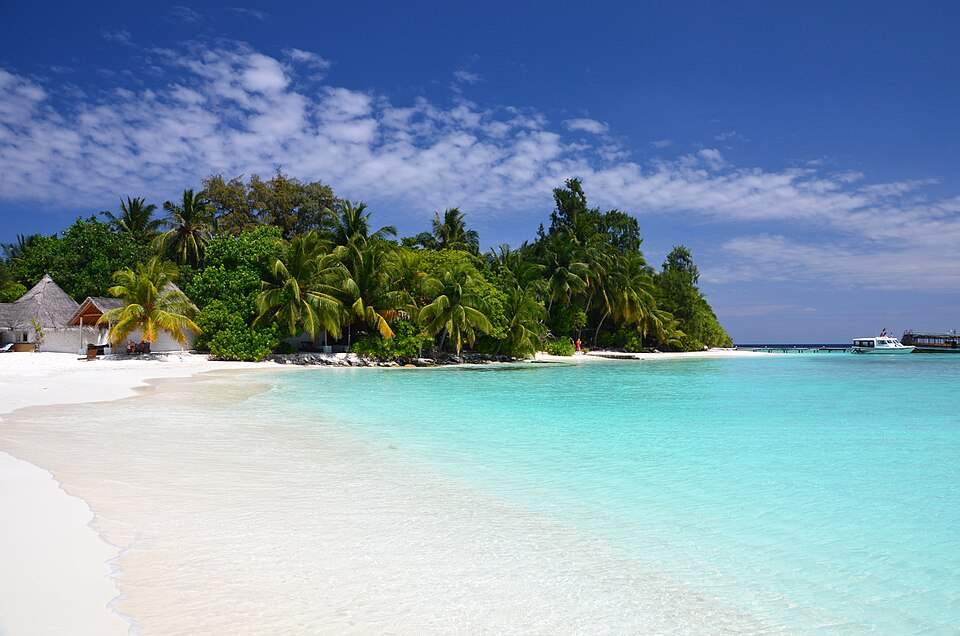
Some islands are famous for beaches, but only a rare few are known for water so clear it feels almost unreal. These islands with the clearest water in the world are defined not by luxury resorts alone. They are defined by unique natural conditions that allow sunlight to penetrate deep into the sea, revealing vivid shades of turquoise, sapphire, and crystal blue.
Water clarity around islands depends on several natural factors. Coral reefs act as natural filters that trap sediments. White sand seabeds reflect sunlight back through the water.
Low plankton concentrations reduce light scattering. Minimal sediment runoff from land helps keep the water clear. When these elements align, the ocean becomes exceptionally transparent—often allowing visibility of 30 to 50 meters or more.
In this guide, we explore the world’s clearest-water islands that you can actually visit.
We explain why their seas are so transparent.
We also highlight the best times and ways to experience them. These include swimming, snorkeling, or simply enjoying some of the clearest oceans on Earth.
What Makes Island Water So Clear?
Island water is clearest where coral reefs act as natural filters, white sand seabeds reflect sunlight, plankton levels remain low, and ocean currents continuously flush away sediments and pollutants.
Why Water Clarity Varies So Much Between Islands
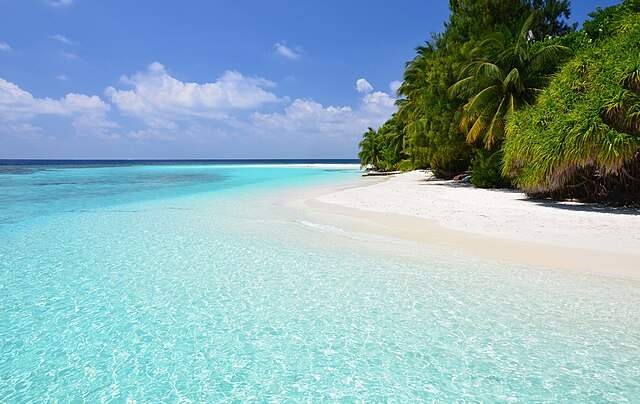
Not all tropical islands have clear water, even if they look similar on a map. Water clarity is the result of multiple environmental factors working together, including seabed composition, biological activity, ocean circulation, and human impact. When these conditions align, the ocean becomes unusually transparent. This often reveals reef structures, marine life, and sand ripples far below the surface.
Understanding these natural processes explains why only a small number of islands consistently appear among the world’s clearest-water destinations, while others with beautiful beaches may still have cloudy or greenish seas.
Coral Atolls as Natural Filters
Coral atolls play a fundamental role in maintaining crystal-clear water. Reef systems surrounding many islands function as natural filtration barriers.
Coral reefs slow down waves and allow suspended sediments to settle before they reach lagoons and shorelines.
As water passes through coral structures, fine particles and organic matter are trapped. It leaves behind exceptionally clear water.
This filtration effect is especially pronounced in coral-ringed islands, where underwater visibility can exceed 40 meters under calm conditions.
White Sand vs Volcanic Seabeds
The type of seabed beneath the water has a significant impact on both clarity and color.
- White sand seabeds are formed from coral fragments and calcium carbonate. These materials reflect sunlight efficiently. This reflection enhances turquoise and light-blue water hues.
- Volcanic or rocky seabeds absorb more light and often release fine sediments, which can reduce visibility and darken the water color.
Islands with pale sandy bottoms not only appear brighter from above but also allow sunlight to penetrate deeper, increasing true water transparency.
Plankton Concentration & Water Color
Plankton levels directly influence how clear ocean water appears.
Islands with the clearest water are typically located in nutrient-poor ocean regions, where plankton growth remains naturally low. With fewer microscopic organisms to scatter light, water appears clearer and more vividly blue.
In contrast, nutrient-rich waters support higher plankton concentrations, which can tint the sea green and reduce visibility, even in otherwise pristine environments.
Human Activity & Pollution Levels
Human presence can quickly alter water clarity.
Low-density tourism, limited coastal development, and strong environmental protections help prevent:
- sediment disturbance
- chemical runoff
- wastewater contamination
Many of the world’s clearest-water islands maintain strict marine conservation rules. Marine conservation rules allow natural filtration and circulation processes to function without disruption.
Ocean Currents & Tidal Flushing
Constant water movement is essential for clarity.
Open-ocean currents and tidal flushing continuously replace near-shore water with cleaner offshore water. Ocean currents prevent sediment buildup and stagnation.
Islands exposed to steady currents tend to have clearer seas than sheltered bays, where particles can accumulate.
This natural circulation explains why some islands maintain clear water year-round, even during peak travel seasons.
Why This Section Matters
Water clarity is not accidental. It is the result of a delicate environmental balance. Knowing these factors helps travelers understand why certain islands consistently rank among the clearest in the world, and why protecting these conditions is essential for preserving their beauty.
Island water is clearest where white sand seabeds, coral reefs, low plankton levels, and minimal freshwater runoff combine to reduce light absorption and sediment suspension.
Islands With the Clearest Water in the World
The following islands consistently rank among the clearest-water destinations on Earth because they combine coral filtration, reflective seabeds, low plankton levels, minimal pollution, and strong ocean circulation. While seasonal conditions can affect visibility, these islands offer some of the most reliably transparent seas you can experience.
Exuma Cays, Bahamas
Water Visibility: 30–40 meters
Water Color: Pale turquoise, crystal blue
Seabed Type: White carbonate sand
Why the Water Is So Clear:
The Exuma Cays sit on vast, shallow sandbanks made of calcium carbonate.
These sandbanks reflect sunlight back through the water column. There are no major rivers in the area. Development is minimal. Constant tidal flushing from the Atlantic prevents sediments from accumulating.
Ocean location: Atlantic Ocean (Caribbean region)
Impact: Strong tidal exchange with the open Atlantic continuously flushes shallow sandbanks, preventing sediment buildup and preserving clarity.
Best Time for Maximum Clarity:
December to April (dry season, calmer seas)
Can You Visit Without a Resort?
Yes — many cays are accessible by boat from Great Exuma.
Best Activities:
Swimming, sandbar walking, and snorkeling in shallow reefs
Local Food Experience:
Fresh conch salad, grilled spiny lobster, cracked conch
Aitutaki Lagoon, Cook Islands
Water Visibility: 40+ meters
Water Color: Neon turquoise
Seabed Type: Fine coral sand
Why the Water Is So Clear:
Aitutaki Lagoon has exceptionally low plankton concentrations due to limited nutrient inflow and excellent tidal circulation. The lagoon’s shallow depth and coral-fragment seabed amplify light reflection, producing its iconic glow.
Ocean location: South Pacific Ocean
Impact: Nutrient-poor Pacific waters and steady lagoon circulation suppress plankton growth, enabling exceptionally high and consistent visibility.
Best Time for Maximum Clarity:
May to October (dry season)
Can You Visit Without a Resort?
Yes — public beaches and lagoon tours are widely available.
Best Activities:
Lagoon cruises, snorkeling, paddleboarding
Local Food Experience:
Ika mata (raw fish in coconut milk), taro-based dishes
Maldives
Water Visibility: 40–50 meters
Water Color: Sapphire blue, transparent turquoise
Seabed Type: Coral sand and reef flats
Why the Water Is So Clear:
The Maldives consist of coral atolls that act as natural filtration systems. Reefs trap sediments while open-ocean currents constantly replace lagoon water, preventing stagnation and turbidity.
Ocean location: Indian Ocean
Impact: Open-ocean currents refresh atoll lagoons continuously, reducing stagnation and maintaining some of the highest visibility levels on Earth.
Best Time for Maximum Clarity:
December to April (northeast monsoon)
Can You Visit Without a Resort?
Yes — local islands now offer guesthouses and budget stays.
Best Activities:
Snorkeling, scuba diving, and lagoon swimming
Local Food Experience:
Mas huni, tuna curries, reef fish grilled with coconut
Bora Bora, French Polynesia
Water Visibility: 30–40 meters
Water Color: Turquoise with emerald hues
Seabed Type: White coral sand
Why the Water Is So Clear:
Bora Bora‘s lagoon is protected by a surrounding coral reef that filters incoming water and blocks sediment-heavy waves. The calm lagoon environment allows particles to settle. This helps maintain clear water, even near the shore.
Ocean location: South Pacific Ocean
Impact: Protected from strong ocean swell by a surrounding reef, the lagoon benefits from calm conditions while still receiving clean offshore water.
Best Time for Maximum Clarity:
May to October (dry season)
Can You Visit Without a Resort?
Partially — public beaches exist, but access is more limited.
Best Activities:
Lagoon snorkeling, kayaking, shallow-water swimming
Local Food Experience:
Poisson cru, grilled mahi-mahi, tropical fruit dishes
El Nido, Philippines
Water Visibility: 25–35 meters
Water Color: Clear blue, emerald green
Seabed Type: Limestone sand and coral
Why the Water Is So Clear:
El Nido’s limestone cliffs reduce soil erosion and sediment runoff. Combined with marine protected areas and seasonal calm seas. This geology helps preserve high water transparency.
Ocean location: Western Pacific Ocean
Impact: Seasonal Pacific currents combined with limestone geology limit sediment runoff, allowing clear-water conditions during extended dry periods.
Best Time for Maximum Clarity:
December to May (dry season)
Can You Visit Without a Resort?
Yes — highly accessible with town-based accommodations.
Best Activities:
Island hopping, snorkeling, kayaking
Local Food Experience:
Grilled squid, fresh fish sinigang, and coconut-based seafood
Zanzibar, Tanzania
Water Visibility: 25–30 meters
Water Color: Light turquoise, aquamarine
Seabed Type: Sandy reef flats
Why the Water Is So Clear:
Zanzibar‘s northern and eastern coasts benefit from low river discharge and strong Indian Ocean tidal movement, which regularly flushes sediments away from reef zones.
Ocean location: Indian Ocean
Impact: Strong tidal movement along the East African coast regularly flushes reef areas, improving clarity during calm, dry-season windows.
Best Time for Maximum Clarity:
January–February and June–October
Can You Visit Without a Resort?
Yes — many public beaches and local guesthouses.
Best Activities:
Swimming, reef snorkeling, and dhow sailing
Local Food Experience:
Swahili seafood curries, grilled octopus, Zanzibar spices
Why These Islands Consistently Rank Among the Clearest
Each of these islands has geological advantages and biological balance.
Pollution levels are limited. Together, these factors create conditions where water clarity stays consistently high, rather than relying on seasonal luck.
Which Island Has the Clearest Water in the World?
There is no single island that permanently holds the title. But coral atoll islands in the Maldives and the Cook Islands consistently record the highest water clarity in the world, with underwater visibility often reaching 40–50 meters under ideal conditions.
Why There Isn’t One Permanent Winner
Water clarity is not a fixed attribute. It changes with season, weather, ocean currents, and biological activity. That is why scientists and marine experts rarely name a single island as the clearest at all times. Instead, they look at consistency: how often an island achieves exceptional clarity across the year.
By that measure, low-lying coral atolls outperform most other island types.
Islands That Most Consistently Achieve Extreme Clarity
- Maldives
- Coral atolls act as natural filtration systems, while open-ocean currents constantly refresh lagoon water. During the dry season, visibility commonly exceeds 40 meters, especially around outer reef edges.
- Aitutaki Lagoon
- Low plankton levels, minimal runoff, and excellent tidal circulation make Aitutaki one of the most reliably clear lagoons on Earth, with glass-like water on calm days.
These destinations do not rely on luck; they benefit from geology and oceanography that favor clarity by design.
Why Coral Atolls Beat Volcanic Islands
Coral atolls tend to have:
- No rivers are carrying sediment
- white sand seabeds that reflect light
- Enclosed lagoons are protected from wave disturbance
- constant tidal flushing
Volcanic islands are dramatic and beautiful. However, they often experience more runoff.
Their seabeds are usually darker. More suspended particles in the water reduce clarity.
A More Accurate Way to Ask the Question
Instead of asking “Which island has the clearest water in the world?” a better question is:
Which islands most reliably offer crystal-clear water you can actually experience?
The answer consistently points to coral atoll destinations with low pollution. These islands have limited runoff and strong ocean circulation. They are exactly the islands highlighted in this guide.
Clearest Water by Region
While crystal-clear water exists around the world, certain regions consistently outperform others due to geology, ocean circulation, and environmental protection. Here is how the world’s clearest island waters compare by region.
Caribbean
The Caribbean is famous for bright turquoise shallows around low-lying islands with white sand seabeds and minimal river runoff.
Regions & islands with the clearest water:
- Exuma Cays, Bahamas – shallow sandbanks + strong tidal flushing
- Turks and Caicos – low plankton, calm seas
- Curaçao – protected leeward reefs
Why the Caribbean performs well:
Warm, shallow waters over reflective carbonate sand amplify clarity and color, especially during the dry season.
South Pacific
The South Pacific is home to some of the clearest lagoons on Earth. These lagoons often surpass other regions in underwater visibility.
Standout destinations:
- Aitutaki Lagoon – consistently 40+ meter visibility
- Bora Bora – reef-protected lagoon clarity
- Fiji – outer islands with minimal runoff
Why it excels:
Low population density, nutrient-poor waters, and extensive coral reef systems create near-ideal clarity conditions.
Indian Ocean
The Indian Ocean hosts some of the most consistently clear ocean water in the world. This is especially true around coral atolls exposed to open-sea circulation.
Top clear-water areas:
- Maldives – world-leading visibility consistency
- Seychelles – granite islands with sandy shelves
- Mauritius – reef-protected lagoons
Why it dominates:
Strong currents, minimal river input, and vast reef systems keep water fresh and sediment-free year-round.
Southeast Asia
Southeast Asia offers exceptionally clear water in specific pockets during dry seasons and around protected marine zones.
Best clear-water islands:
- El Nido, Philippines – limestone geology reduces sediment
- Raja Ampat – pristine reefs, remote setting
- Koh Lipe – calm-season clarity
Important note:
Clarity here is more season-dependent due to monsoons and nutrient-rich waters.
Africa
Africa’s clearest island waters are concentrated along the Indian Ocean coast, where tidal movement and reef systems dominate.
Notable destinations:
- Zanzibar – strong tidal flushing
- Bazaruto Archipelago – protected marine park
- Pemba Island – low development, clear reefs
Why it stands out:
Lower tourism density and powerful ocean circulation help maintain clarity, especially outside monsoon months.
Regional Takeaway
The clearest island waters are most consistently found in the Indian Ocean and the South Pacific. The Caribbean offers the brightest shallow-water clarity. Southeast Asia provides spectacular visibility during certain seasons.
Best Time of Year to See Crystal-Clear Water
The clearest ocean water is usually found during dry seasons with calm winds and minimal rainfall, when sediment runoff is low, and plankton levels remain naturally suppressed.
While some islands are blessed with clear water year-round, seasonal conditions play a major role in how transparent the sea appears. Understanding when to go can make the difference between good visibility and truly glass-like water.
Dry Season vs Monsoon Season
Dry seasons are almost always the best time to experience crystal-clear water.
During dry months:
- Rainfall is limited, reducing sediment runoff
- Rivers and streams carry fewer particles into the sea
- Wave action is typically calmer
In contrast, monsoon or wet seasons introduce heavy rainfall that washes soil and organic matter into coastal waters, temporarily reducing clarity, even in otherwise pristine locations.
General rule:
Coral atoll islands perform best during their dry season, while mountainous or volcanic islands are more sensitive to seasonal rainfall.
Wind Patterns & Surface Disturbance
Wind is an often underestimated factor in water clarity.
Strong winds:
- stir up surface sediments
- increase wave turbulence
- reduce light penetration
Calm wind periods allow particles to settle, dramatically improving visibility. This is why many islands experience their clearest water early in the morning or during extended calm-weather windows.
Trade winds, when moderate and consistent, can help flush water without causing surface disturbance—ideal conditions for clarity.
Plankton Bloom Months to Avoid
Plankton blooms are natural but can temporarily reduce water clarity.
Blooms typically occur when:
- nutrient levels increase
- water temperatures rise
- currents slow
During these periods, water may appear greener or slightly hazy, even in clean environments. While plankton-rich water supports marine life, it scatters light and lowers visibility.
Tip for travelers:
Avoid peak plankton bloom months if underwater visibility is a priority for snorkeling or photography.
Seasonal Clarity at a Glance
- Best conditions: Dry season + calm winds
- Moderate clarity: Shoulder seasons with stable weather
- Lowest clarity: Monsoon months or peak plankton bloom periods
Planning Takeaway
Choosing the right season is just as important as choosing the right island. By traveling during dry, low-wind periods and avoiding bloom-heavy months, you dramatically increase your chances of seeing the clearest ocean water these islands have to offer.
How Clear Is “Clear”? Island Water Visibility Compared
Not all clear water is the same. Scientists and divers measure clarity using underwater visibility (in meters)—the distance you can clearly see horizontally underwater. The table below compares the world’s clearest-water islands using consistent criteria.
| Island / Destination | Typical Visibility Range | Island Type | Best Clarity Season | Consistency Score |
| Exuma Cays (Bahamas) | 30–40 m | Low-lying carbonate islands | Dec–Apr | High |
| Aitutaki Lagoon (Cook Islands) | 40+ m | Coral atoll lagoon | May–Oct | High |
| Maldives | 40–50 m | Coral atolls | Dec–Apr | Very High |
| Bora Bora | 30–40 m | Volcanic island with a coral lagoon | May–Oct | High |
| El Nido (Philippines) | 25–35 m | Limestone island system | Dec–May | Seasonal |
| Zanzibar | 25–30 m | Sandy Reef Island | Jun–Oct | Seasonal |
How to Read This Table (Quick Explainer)
- 20–30 meters: Excellent clarity for swimming and snorkeling
- 30–40 meters: World-class visibility, vibrant reef detail
- 40–50 meters: Elite clarity, often found in coral atoll systems
Consistency score reflects how reliably an island maintains high clarity across the year:
- Very High: Exceptional clarity most of the year
- High: Clear during long, predictable seasons
- Seasonal: Highly clear during dry months, variable otherwise
Are These Islands Still Clear in 2026?
Yes—many of the world’s clearest-water islands still maintain exceptional water clarity in 2026. However, long-term clarity increasingly depends on climate resilience, coral health, and sustainable tourism management.
Water clarity is no longer something that can be taken for granted. While the islands featured in this guide remain among the clearest on Earth, environmental pressure and climate variability now play a much larger role than they did a decade ago.
Climate Change Impact on Water Clarity
Climate change affects water clarity both directly and indirectly.
Rising sea temperatures alter ocean circulation patterns and can increase biological activity, sometimes leading to higher plankton concentrations. More intense storms and unpredictable rainfall also increase sediment runoff around islands with fragile coastlines.
That said, islands with strong natural water exchange and minimal freshwater runoff continue to outperform others, even as climate patterns shift.
Coral Bleaching & Water Clarity
Healthy coral reefs are critical to clear water.
When corals bleach or degrade:
- reef structures weaken
- sediment trapping efficiency declines
- Algae growth can increase turbidity.
However, bleaching does not automatically mean murky water. Many islands still experience high clarity during calm seasons, where reef recovery programs and reduced human impact are in place.
Islands with active reef management tend to recover clarity faster after bleaching events.
Sustainable Tourism Zones
Tourism can either protect or degrade water clarity.
Islands that have introduced:
- visitor caps
- wastewater treatment systems
- regulated boating and anchoring
- reef-safe tourism guidelines
have shown measurably better water conditions over time compared to unrestricted destinations.
Several of the clearest-water islands now operate under sustainability frameworks that balance access with preservation.
Marine Protected Areas (MPAs)
Marine protected areas are one of the strongest predictors of long-term water clarity.
MPAs help by:
- limiting destructive fishing practices
- preserving reef structures
- maintaining ecological balance
Islands with large, well-enforced MPAs consistently show better underwater visibility than comparable unprotected regions.
What This Means in 2026 and Beyond
The clearest waters of the future will belong to islands that actively protect their marine ecosystems, not just those with favorable geography. While nature sets the foundation, policy and stewardship now determine longevity.
Travelers who choose responsibly managed destinations play a direct role in preserving these rare environments.
Can You Actually Visit These Islands?
Yes, most islands with the clearest water in the world are open to travelers. They offer everything from budget guesthouses to luxury resorts, provided visitors plan for visas, seasonality, and responsible travel practices.
This is one of the most common (and practical) questions readers have. Crystal-clear water is inspiring, but accessibility, cost, and ethics ultimately determine whether a destination is realistic.
Visa Ease
Many clear-water island destinations are surprisingly easy to enter.
- Visa-free or visa-on-arrival policies are common in the Caribbean, Southeast Asia, and the Indian Ocean.
- Island nations dependent on tourism often simplify entry requirements to encourage longer stays.
- Remote islands may require transit visas or multi-leg flights, but paperwork is usually straightforward.
Planning tip: Always check entry rules close to travel dates, as visa policies can change seasonally.
Budget vs Luxury
Clear water does not automatically mean high cost.
- Luxury end: Overwater bungalows, private islands, and all-inclusive resorts dominate places like the Maldives and Bora Bora.
- Mid-range & budget: Guesthouses, eco-lodges, and locally run stays are widely available in destinations such as El Nido, Zanzibar, and parts of the Caribbean.
In many cases, the water quality is identical regardless of where you stay; the difference lies in comfort, exclusivity, and services.
Crowds & Accessibility
Crowd levels vary dramatically by island and season.
- Easily accessible islands with airports and day tours tend to be busier during peak months.
- Remote islands or outer atolls often remain quiet but require extra travel time and planning.
Choosing shoulder seasons or lesser-known islands within the same region can deliver equally clear water with far fewer visitors.
Ethical Tourism Tips
Protecting water clarity depends on traveler behavior.
To minimize impact:
- Choose accommodations with wastewater treatment systems
- Use reef-safe sunscreen
- avoid touching coral or stirring the seabeds
- support local businesses and conservation initiatives
Ethical tourism helps preserve the very conditions that make these islands exceptional.
Practical Takeaway
Yes, these islands are visitable; but the experience depends on when you go, how you travel, and how responsibly you behave. Clear water is a shared resource, and thoughtful travel choices help ensure it remains that way.
Safety & Natural Conditions to Know Before You Go
Quick clarification:
Clear water does not always mean calm or risk-free water. Even the clearest seas are shaped by tides, currents, and seasonal marine activity.
This section helps travelers enjoy these destinations safely and responsibly, without overcomplicating the experience.
Clear Water ≠ Calm Water
Crystal-clear water can still have:
- strong tidal currents
- sudden depth changes
- offshore pull near reef passes
Islands with excellent water circulation—often the clearest—may experience noticeable currents, especially during tide changes. Calm surface conditions can be misleading.
Tip: Always observe local swimming advice and avoid reef passes during tide shifts.
Understanding Tidal Timing
Tides significantly affect water conditions around islands.
- Low tide: clearer shallow areas, exposed reef flats
- High tide: better for swimming over reefs, but stronger currents
Planning water activities around slack tide (the short period between incoming and outgoing tides) often provides the safest and clearest conditions.
Jellyfish & Seasonal Marine Life
Some clear-water regions experience seasonal jellyfish or plankton blooms, especially during warmer months or after prolonged calm periods.
These events are:
- temporary
- location-specific
- usually well-known locally
Tip: Ask local guides or accommodations about seasonal marine conditions before swimming.
Reef-Safe & Responsible Behavior
Clear water ecosystems are delicate.
To protect both yourself and the environment:
- Use reef-safe sunscreen
- avoid touching coral or standing on reef flats
- never chase or feed marine life
- Follow marked swimming zones
Responsible behavior preserves water clarity and reef health for future visitors.
Why This Matters
Understanding natural conditions doesn’t reduce the magic—it enhances it. Travelers who respect tides, currents, and reef systems enjoy safer, richer, and more sustainable experiences.
Why These Islands Look Unreal in Photos
The islands with the clearest water don’t only have transparent seas; they also photograph exceptionally well because of how light, depth, and seabed composition interact. This is why images from these places dominate Google Discover, Instagram, and Pinterest.
Below is what makes each destination visually extraordinary.
Exuma Cays
Exuma’s shallow depth and white carbonate sand reflect sunlight straight back to the surface. This creates glowing turquoise gradients that remain visible even on cloudy days. The lack of surface chop makes aerial and drone shots look almost unreal.
Aitutaki Lagoon
Aitutaki photographs so vividly because its lagoon is both shallow and expansive. Sunlight penetrates easily. The sunlight bounces off pale coral sand and produces neon-blue tones that are visible from aircraft windows and satellites.
Maldives
The Maldives’ ring-shaped atolls create a dramatic color contrast: deep navy ocean outside, electric turquoise lagoons inside. Underwater, high visibility and minimal particles allow reef details to appear sharp even in natural light photography.
Bora Bora
Bora Bora’s protected lagoon acts like a natural light diffuser. Calm water, white sand, and varying lagoon depths produce layered shades of blue and green that remain consistent throughout the day. This is ideal for wide-angle and overwater shots.
El Nido
El Nido’s limestone cliffs frame clear lagoons. These limestone cliffs are adding dramatic contrast to the water’s emerald tones. Reduced sediment runoff keeps the water transparent, while shallow coves allow underwater features to be photographed clearly near the surface.
Zanzibar
Zanzibar’s best photo conditions occur during low tide and calm seasons, when sandy reef flats reflect sunlight and tidal pools become mirror-like. Strong equatorial light enhances brightness, especially in shallow coastal waters.
FAQs About the Clearest Water Islands
Which island has the clearest water in the world?
Coral atoll islands such as those in the Maldives and the Cook Islands consistently record the highest water clarity, with visibility often reaching 40–50 meters under ideal conditions.
Water clarity varies seasonally, but these destinations remain the most reliable due to natural filtration from coral reefs and constant ocean circulation.
Why is the water in the Maldives so clear?
The Maldives’ water is exceptionally clear because:
- Coral reefs trap sediments
- There are no rivers carrying runoff
- Strong ocean currents continuously refresh the lagoon water
- white sand seabeds reflect sunlight
Together, these factors create some of the clearest ocean water on Earth.
Are clear waters the same as clean water?
Not always.
Clear water means high visibility, while clean water refers to low pollution levels. Most of the world’s clearest-water islands score well on both, but clarity alone does not guarantee safety or ecological health.
Is crystal-clear water safe for swimming?
Yes, in most cases.
Clear water typically indicates low sediment and low bacterial activity. However, travelers should still:
- Follow local swimming advisories
- avoid damaged coral areas
- Be aware of tides and currents
Do clear-water islands have fewer marine animals?
No; often the opposite.
While plankton-rich waters support larger fish populations, clear-water coral reefs host:
- colorful reef fish
- corals and invertebrates
- excellent snorkeling visibility
Clear water enhances visibility, not biodiversity loss.
Are islands with the clearest water expensive to visit?
Not necessarily.
- Luxury options dominate some islands, but
- budget guesthouses and local stays are available in many destinations
The cost depends more on accommodation choice and season than on water quality itself.
When is the best time to see the clearest ocean water?
Best conditions:
Dry season, calm winds, and outside plankton bloom months.
Traveling during shoulder seasons often provides excellent clarity with fewer crowds.
Does climate change affect water clarity?
Yes. Rising sea temperatures, coral bleaching, and stronger storms can reduce clarity over time. Islands with marine protected areas and sustainable tourism policies are better positioned to maintain clear water long-term.
Final FAQ Takeaway
The clearest water in the world is not accidental; it results from geology, biology, and responsible management. Choosing the right island, season, and travel approach makes all the difference.
Conclusion: Where Science Meets the World’s Most Beautiful Waters
The islands with the clearest water in the world are not defined by luxury alone, but by a rare alignment of natural science and environmental balance. Coral reefs filtering sediments, white sand seabeds reflecting sunlight, low plankton levels, and constant ocean circulation all work together to create seas so transparent that they feel almost unreal.
Yet this clarity is fragile. Climate change, coral stress, and unmanaged tourism can quickly undo what nature has perfected over thousands of years. Choosing when to visit, where to stay, and how to behave matters—not only for your experience, but for the future of these islands.
Slow travel, respectful snorkeling, reef-safe choices, and support for local communities help preserve the very conditions that make these destinations extraordinary. Crystal-clear water is not a guarantee—it is something we collectively protect.
If you are inspired to explore further, you may also enjoy:
- Most Beautiful Islets in the World – a curated look at smaller, lesser-known island gems
- Hidden Islands You Can Visit – destinations that combine beauty with fewer crowds
The clearest waters on Earth are still out there—best experienced thoughtfully, responsibly, and with a deep appreciation for the science behind their beauty.
