

Discover Romania’s Medieval Citadel
This Sighișoara travel guide covers the best things to do in Sighișoara, Romania, from exploring its colorful medieval streets to climbing the historic Clock Tower.
Tucked into the heart of Transylvania in central Romania, Sighișoara is a remarkably well-preserved medieval town known for its colorful houses, cobbled streets, fortified towers, and centuries-old Saxon architecture. Set above the Târnava Mare River, this historic destination offers a glimpse into the region’s past, where medieval trade, craftsmanship, and fortified settlements shaped the character of the town.
The highlight is the Historic Centre of Sighișoara, a UNESCO World Heritage Site inscribed in 1999. Developed by Transylvanian Saxons, the citadel retains much of its distinctive medieval layout, including defensive walls, surviving guild towers, historic churches, and the prominent Clock Tower overlooking the surrounding rooftops. These architectural features make Sighișoara an important example of a fortified medieval town in Central and Eastern Europe.
Sighișoara is also associated with Vlad the Impaler, the historical ruler often linked to the Dracula legend. Although popular stories can blur the line between history and fiction, the town’s connections to Vlad add another dimension to its appeal. Visitors can explore the historic house traditionally associated with his birthplace while discovering the broader Saxon and Romanian heritage that defines the town.
For travelers exploring Romania, Sighișoara offers a different experience from the country’s larger cities. Its compact citadel is ideal for walking, with scenic viewpoints, atmospheric squares, small museums, traditional restaurants, and quiet lanes to discover at an unhurried pace. It also makes a useful stop on a Transylvania itinerary, particularly for visitors combining medieval towns with fortified churches and rural Saxon villages.
Whether you have a few hours to explore the citadel or a full weekend to discover the surrounding countryside, this Sighișoara travel guide covers the main attractions, practical travel tips, local food, accommodation options, and nearby destinations to help you plan your visit.
For the official heritage designation and inscription details, consult UNESCO’s Historic Centre of Sighișoara listing.
Sighișoara Travel Guide: Best Things to Do in Sighișoara
Explore Sighișoara’s Medieval Citadel
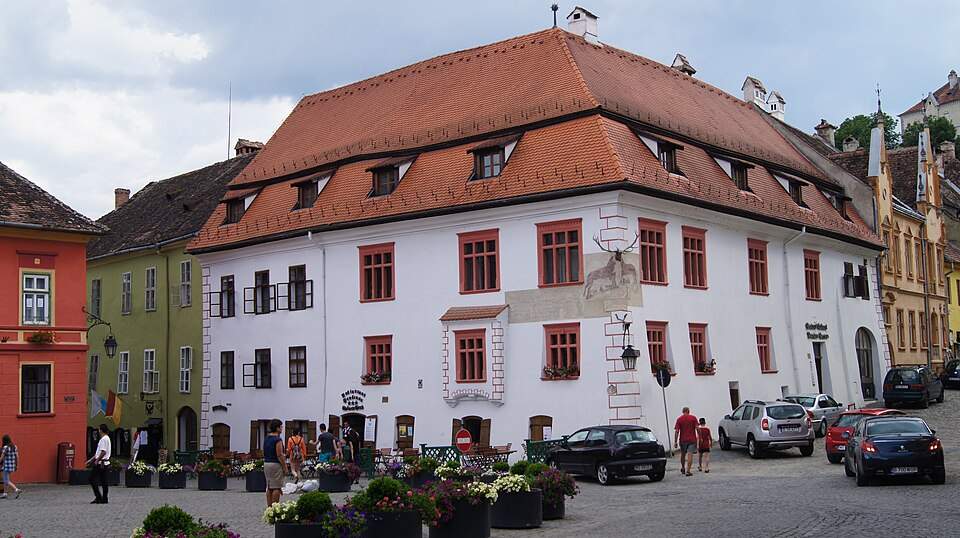 Step through Sighișoara’s medieval citadel, and you’ll find yourself surrounded by pastel-colored houses, cobbled lanes, and fortified towers that have watched over this Transylvanian town for centuries. Perched on a hill above the Târnava Mare River, the historic Upper Town invites you to explore at a slower pace, where every turn reveals another glimpse of its Saxon heritage and medieval past.
Begin near the Clock Tower, the citadel’s most recognizable landmark, and wander through the narrow streets towards Piața Cetății (Citadel Square). Along the route, you’ll encounter historic façades, small cafés, traditional houses, and remnants of the fortifications that once protected the settlement. The streets also lead towards the Covered Staircase and the Church on the Hill, two important landmarks that reveal more about Sighișoara’s history.
Sighișoara developed as a settlement of Transylvanian Saxons, whose craftsmanship and trade helped shape its urban character. The historic centre was inscribed on the UNESCO World Heritage List in 1999. It remains an inhabited town rather than an open-air museum, so historic buildings sit alongside cafés, shops, homes, and everyday local life.
Allow around one to two hours to explore the main streets at a relaxed pace, with additional time if you plan to visit museums or climb the towers. Wear comfortable shoes, as the cobblestones can be uneven and some lanes are steep. For a more rewarding visit, venture beyond the busiest streets and pay attention to the architectural details that make this historic citadel distinctive.
Climb the Clock Tower and Visit the History Museum
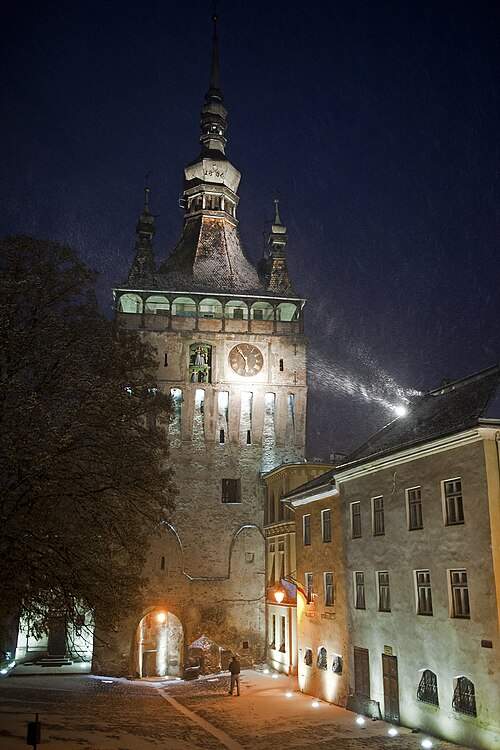 Rising above Sighișoara’s colorful rooftops, the Clock Tower is one of the town’s most recognizable landmarks and an excellent place to appreciate its medieval heritage. Built in the 14th century to defend the main entrance to the citadel, it later served as the seat of the town council. Today, the tower houses the Sighișoara History Museum and provides panoramic views of the UNESCO-listed historic centre.
Begin at the tower’s ground-level entrance and follow the staircase upwards, exploring the museum rooms as you climb. The exhibits cover local history, archaeology, traditional crafts, furniture, and other objects that offer insight into the region’s past. Look out for the historic clock mechanism and its colorful wooden figurines, which represent symbolic figures associated with the days of the week.
After exploring the museum displays, continue ascending to the upper observation gallery. From here, you can look across the citadel’s red-tiled rooftops, fortified towers, and pastel-colored houses towards the surrounding Transylvanian hills. The elevated viewpoint also offers excellent photography opportunities and a clearer perspective on the layout of the medieval settlement.
The visit follows a simple route: enter the tower, explore the museum exhibits while ascending, enjoy the panoramic views from the observation gallery, and descend to exit. Allow around 45–60 minutes for the experience, depending on how long you spend examining the displays and taking photographs. The climb involves stairs, so comfortable footwear is advisable.
Before visiting, check the museum’s current opening hours and admission prices, as schedules can vary seasonally and the museum is generally closed on Mondays. Once back outside, continue exploring the surrounding citadel streets and nearby historic landmarks.
Walk Up the Covered Staircase
One of Sighișoara’s most distinctive historic features is the Covered Staircase, a wooden-roofed passage that connects the lower streets of the citadel with the Church on the Hill and the old school above. Built in 1642, the staircase was designed to make the uphill journey safer and more comfortable for students and churchgoers, particularly during harsh winter weather.
The staircase has approximately 175 steps today, sheltered beneath a timber roof that gives the passage its characteristic medieval atmosphere. As you climb, notice the sturdy wooden structure, the warm tones of the aged timber, and the way the covered passage follows the slope of the hill. The enclosed setting feels quite different from the open cobbled lanes below and offers a glimpse into the practical details of daily life in historic Sighișoara.
Take your time on the ascent, as the steps can be uneven and may become slippery in wet weather. At the top, you will reach the Church on the Hill and the nearby historic school, making the staircase a natural part of a walking route through the citadel. The climb is relatively short, but it can be steep enough to require a few pauses along the way.
Allow around 10–20 minutes for the climb, depending on your pace and how often you stop for photographs. For the most rewarding visit, combine the Covered Staircase with the church and the old cemetery on the hill rather than treating it as a standalone attraction. Its architectural simplicity, historic purpose, and connection to some of the citadel’s most important landmarks make it a memorable stop on a Sighișoara walking tour.
Visit the Church on the Hill
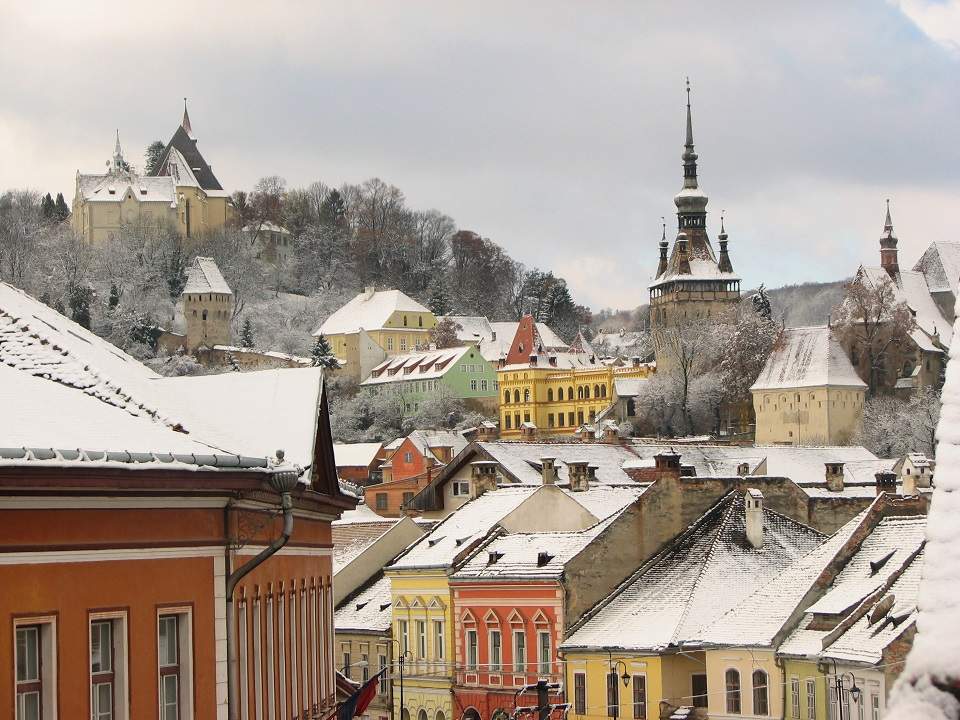 At the top of Sighișoara’s Covered Staircase stands the Church on the Hill, a striking Gothic landmark that rewards visitors with a closer look at the town’s religious and architectural heritage. Dedicated to Saint Nicholas, the Evangelical church developed over several centuries, with its main construction phases extending from the 13th century into the early 16th century. Its elevated position and substantial stone structure make it one of the most distinctive historic buildings in the citadel.
Step inside to appreciate the church’s spacious interior, Gothic architectural details, historic furnishings, and surviving medieval wall paintings. Among its notable features are the carved stone tabernacle and pulpit dating from the 15th century. The frescoes, some of which were uncovered during restoration work, offer a glimpse into the religious art that once decorated the church. Beneath the choir lies an older Romanesque crypt, an important reminder that the site predates the building visitors see today.
After exploring the church, take time to walk through the adjoining cemetery on the hillside. Its old gravestones reflect the long-standing Saxon community and the generations who lived in Sighișoara. The quieter surroundings provide a contrast to the busier streets of the citadel below and offer another perspective on the town’s history.
Allow around 30–45 minutes to visit the church and cemetery, in addition to the time needed to climb the Covered Staircase. Wear comfortable shoes, and remember that the church remains an active place of worship, so visits may be restricted during services. Check the parish’s current visitor information before your trip, as opening hours and admission arrangements can change.
For travelers interested in medieval architecture, religious art, and Transylvanian Saxon heritage, the Church on the Hill is a worthwhile stop that adds historical depth to a walk through Sighișoara’s UNESCO-listed citadel.
Discover Sighișoara’s Historic Guild Towers
Beyond its colorful houses and cobbled streets, Sighișoara’s medieval citadel preserves a remarkable network of defensive towers that reveal how the town protected itself centuries ago. Each tower was traditionally assigned to a particular craftsmen’s guild, whose members were responsible for maintaining and defending that section of the fortifications. Of the original 14 defensive towers, nine survive today, making them an important part of the town’s architectural heritage.
As you explore, look for the Tailors’ Tower, which guards a historic entrance, and the Tinsmiths’ Tower, known for its distinctive upper structure. Other surviving towers include those associated with the Butchers, Furriers, Blacksmiths, Shoemakers, Ropemakers, and Tanners. Their different positions and forms reflect the defensive needs of the settlement.
These towers were not simply architectural landmarks. Their positions helped protect gateways, vulnerable sections of the walls, and access routes into the citadel. The guild system also illustrates the close relationship between craftsmanship, trade, and civic responsibility in medieval Transylvanian towns. Although some towers have been rebuilt or altered over the centuries, their surviving structures offer a tangible connection to Sighișoara’s past.
You can discover several towers during a leisurely walk along the citadel’s streets and defensive perimeter. Some are best appreciated from the outside, and not all are open to visitors, so focus on their architecture, location, and historical role rather than expecting to enter each one. Allow around 30–45 minutes to notice several of the main towers as part of your wider citadel walk.
For a more rewarding visit, compare the towers’ shapes and positions as you explore. Their differences make more sense when you understand that each formed part of a larger defensive system maintained by the town’s craftsmen. Together, they help explain why Sighișoara remains such a distinctive example of a fortified medieval settlement.
Visit the Monastery Church
A short walk from the Clock Tower, the Monastery Church (Biserica Mănăstirii) offers another perspective on Sighișoara’s medieval religious heritage. Located beside the former Dominican monastery complex, the church stands close to the citadel’s main entrance, making it easy to include while exploring the central streets.
The church’s history reflects the changing religious life of the town. The Dominican monastery was established during the medieval period, and the church later became associated with the town’s Lutheran community after the Reformation. Inside, visitors may find historic furnishings and architectural details that reward a slower look, although access and what is on display can vary.
Even if the church is closed when you pass, take a moment to appreciate its exterior and its relationship to the Clock Tower and surrounding historic buildings. Because it is an active religious site, check visitor access in advance and avoid entering during services unless visitors are welcome.
Allow around 15–30 minutes if the church is open. Its central location makes it a useful addition to a walking route, particularly for travelers interested in seeing more than the citadel’s best-known landmarks.
Visit the House Associated with Vlad the Impaler
A short walk from Sighișoara’s Clock Tower brings you to Vlad Dracul House, a historic building closely associated with Vlad III, better known as Vlad the Impaler, the 15th-century ruler whose name is often linked to the legend of Dracula. With its distinctive yellow façade and medieval stonework, the house is one of the citadel’s most recognizable landmarks and a natural stop for visitors interested in the history behind the famous name.
The building is traditionally identified as the place where Vlad the Impaler was born around 1431, while his father, Vlad II Dracul, was living in Sighișoara. However, this birthplace attribution is not conclusively documented, so it is more accurate to describe the house as being associated with Vlad the Impaler rather than presenting the claim as established fact. Historical accounts do connect his father with Sighișoara during the 1430s, adding substance to the building’s historical associations.
The name Dracul is connected to Vlad II’s membership in the Order of the Dragon, a chivalric order, and is commonly translated as “the Dragon.” His son became known as Vlad Țepeș, meaning “Vlad the Impaler,” because of his use of impalement as a method of punishment. Centuries later, Bram Stoker’s fictional Count Dracula helped turn the name into a lasting part of popular culture, although the historical ruler and the fictional vampire are distinct figures.
Today, Vlad Dracul House accommodates a restaurant with a medieval theme. Visitors can admire the building from outside, examine its historic façade, and, if they wish, stop for a meal. Rather than expecting a large museum dedicated to Vlad, approach it as a brief historical stop that provides context for the stories surrounding Sighișoara.
Allow around 10–20 minutes to view the exterior and appreciate its historical associations, or longer if you plan to dine there. Its central location makes it easy to combine with the Clock Tower and nearby citadel streets. For travelers interested in medieval Romanian history, the house offers an opportunity to separate documented history from the legends that have grown around the name Dracula.
Explore Piața Cetății (Citadel Square)
At the heart of Sighișoara’s medieval citadel, Piața Cetății (Citadel Square) is a charming historic gathering place surrounded by colorful houses, cobbled streets, and centuries-old architecture. Unlike the narrow lanes leading into the square, this open space offers room to pause, admire the surrounding buildings, and appreciate the layout of the old town. Its historic character makes it a natural stopping point while exploring Sighișoara on foot.
During the Middle Ages, the square served as an important commercial and civic centre, hosting markets, public gatherings, and judicial proceedings. Its position at the meeting point of several streets helped make it a focal point of community life. Today, the historic buildings surrounding the square preserve the character of the former Saxon settlement, reflecting the architectural heritage that earned Sighișoara’s historic centre UNESCO World Heritage status in 1999.
As you explore, look for two distinctive buildings: Casa cu Cerb (the Stag House), named after the deer’s head and antlers projecting from its corner, and the Venetian House, recognizable for its distinctive window frames. Their façades add character to the square and offer interesting details to look for as you wander.
Take a seat at one of the nearby café terraces, enjoy a meal, or simply watch visitors move through the historic centre. The square is also a pleasant place to pause between visits to the Clock Tower and Vlad Dracul House, both within easy walking distance. For photography, look beyond the wide view and capture the architectural details, contrasting façade colors, and perspectives along the adjoining streets.
Allow around 20–30 minutes to explore the square, with extra time if you stop for refreshments. There is no need to rush: part of its appeal lies in appreciating the historic surroundings and observing the everyday life that continues within the medieval citadel.
Photograph the Colorful Streets and Saxon Houses
One of the simple pleasures of visiting Sighișoara is wandering through its colorful streets with a camera in hand. Pastel-yellow, rose, and ochre façades line the cobbled lanes, while steep rooflines, wooden doors, and historic window frames give the old town its distinctive Transylvanian character. Away from the main landmarks, quieter corners reveal architectural details and street scenes that are easy to miss when following a fixed sightseeing route.
As you explore the citadel, look for the traditional houses built and adapted over generations by the Transylvanian Saxon community. Their architectural features reflect the town’s development as a medieval trading settlement, while their varied colors and decorative details create a striking contrast against the red-tiled rooftops and fortified towers. Around Piața Cetății, the Stag House is particularly worth photographing for the sculpted deer’s head and antlers attached to its corner.
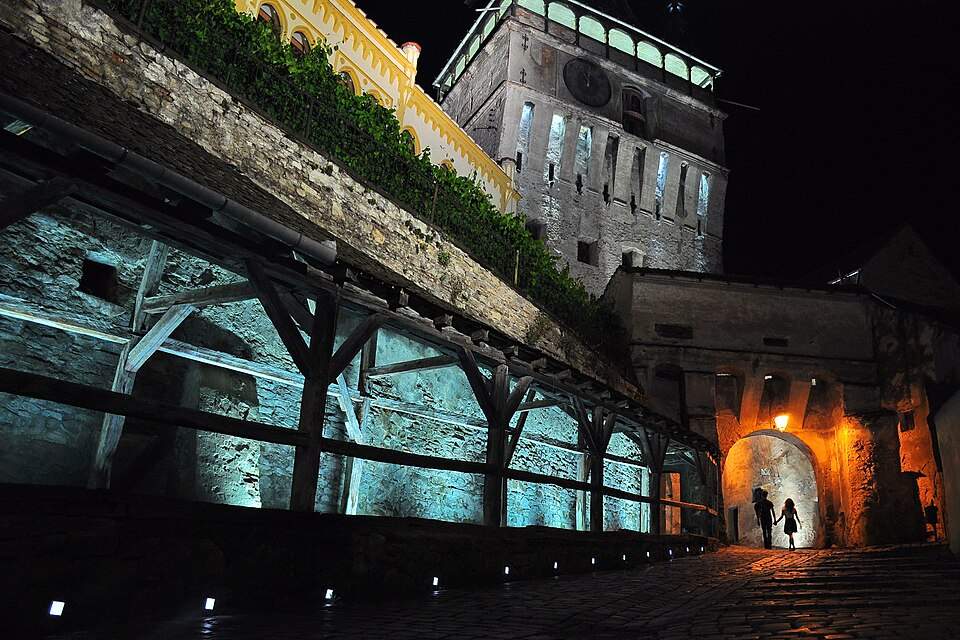 For wider compositions, frame the narrow streets with the Clock Tower or surrounding rooftops in the background. For closer shots, focus on painted façades, old wooden doors, ornamental windows, and the textures of weathered stone and plaster. Walking a little beyond the busiest routes can also help you find less crowded viewpoints and more natural street scenes.
Early morning is a good time to photograph the citadel’s streets before visitor numbers increase, while late afternoon can bring softer light to the colorful façades. If you want to capture the atmosphere after dark, return to the main lanes when the historic buildings are illuminated.
Allow around 30–60 minutes for a relaxed photography walk, or longer if you enjoy architectural photography. Be considerate when photographing homes and residents, particularly in quieter residential lanes. Sighișoara’s charm lies not only in its colorful appearance but also in the living historic community that continues to occupy these centuries-old streets.
Walk Along the Medieval Defensive Walls
Beyond Sighișoara’s colorful streets and historic squares, the medieval defensive walls reveal how this hilltop settlement protected itself from attack. Built and strengthened between the 13th and 17th centuries, the fortifications once enclosed the citadel with walls, defensive towers, and artillery bastions. Of the original 14 towers, nine survive, offering a fascinating glimpse into the military organization of this former Saxon town.
Unlike some European walled towns, Sighișoara does not have a continuous walkway along the top of its ramparts. Instead, you can follow streets, lanes, and paths beside sections of the old walls, passing historic towers and viewing the fortifications from different angles. This makes the walk an opportunity to appreciate both the defensive architecture and the medieval townscape surrounding it.
Look for sections of the wall near the Tailors’ Tower and Tinsmiths’ Tower, then note other surviving towers as you follow the lanes around the hill. The guild system linked local craft groups with the maintenance and defence of particular towers. Most are viewed from outside rather than entered, and the paths beside the walls do not form one continuous rampart walk.
Take your time to notice the changing height of the walls, their stonework, and the way the towers occupy strategic positions around the hill. Some sections offer attractive views of the rooftops and surrounding landscape, while others lead through quieter lanes away from the busiest parts of the citadel.
Allow around 30–60 minutes for a short walk past several sections of the fortifications, or longer if you want to explore more of the perimeter. Wear sturdy shoes, as some paths are steep, uneven, or cobbled. Be aware that certain sections pass near residential properties and that the route is not uniformly lit, so daylight is the better choice.
Walking beside Sighișoara’s defensive walls adds an important historical dimension to your visit. Rather than seeing the towers as isolated landmarks, you can understand how they worked together as part of a larger system that helped preserve the medieval citadel now recognized as a UNESCO World Heritage Site.
Experience Sighișoara After Sunset
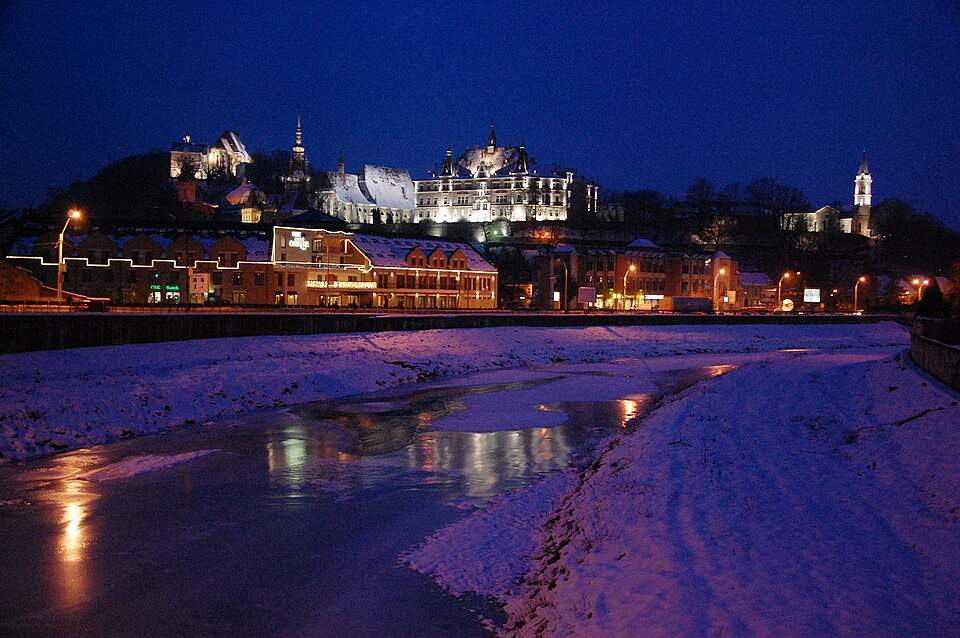 Sighișoara’s medieval citadel takes on a different atmosphere as evening falls, when the daytime sightseeing crowds begin to thin and the historic streets become quieter. Rather than leaving as soon as you finish visiting the main attractions, set aside an evening to photograph the illuminated Clock Tower, wander through the old town, and enjoy dinner in a historic setting.
Start your evening about 30–45 minutes before sunset. Begin around Piața Cetății (Citadel Square), then walk towards the Clock Tower and along the surrounding cobbled lanes. This is a good time to photograph the colorful façades in the fading daylight before the streetlights become more prominent. Sunset times vary by season, so check the local forecast and sunset time when planning your visit.
After sunset, spend another 20–30 minutes exploring the citadel on foot. Revisit the Clock Tower from the outside, look for illuminated historic buildings, and stroll through the quieter side streets. The Covered Staircase is another atmospheric stop, although the steps can be difficult to navigate in low light. Use care on uneven cobblestones and avoid poorly lit routes.
Finish with a relaxed dinner. Choose a restaurant inside the citadel for a meal surrounded by historic architecture, or head down towards the Lower Town for more options. Try traditional Transylvanian dishes such as sarmale (cabbage rolls), hearty regional soups, or papanași, a popular Romanian dessert. For a convenient location near the covered staircase, Terasa Cafe La Scara is one option to investigate. Check its current opening hours and menu before setting out, particularly outside the summer season.
Allow approximately one to two hours for the evening walk and photography, plus another hour for dinner. You do not need to purchase a ticket to stroll through the public streets of the citadel, but museums and other indoor attractions have their own opening schedules and generally close earlier. If you plan to return to accommodation outside the historic centre, arrange transport or confirm your walking route in advance.
An evening in Sighișoara is best enjoyed without a packed itinerary. A short photography walk, time to appreciate the historic streets, and a leisurely dinner are enough to experience the citadel from a different perspective.
What to Eat in Sighișoara
Exploring Sighișoara is as much about discovering Transylvanian food as it is about wandering through its medieval streets. Local cooking reflects Romanian traditions alongside the culinary heritage of the region’s Saxon and Hungarian communities, with hearty soups, slow-cooked meats, polenta, seasonal ingredients, and homemade desserts featuring prominently on many menus. Whether you stop for lunch in the citadel or sit down for dinner below the Clock Tower, trying a few regional dishes adds another dimension to your visit.
Try Traditional Romanian and Transylvanian Dishes
Start with sarmale, cabbage rolls typically filled with minced meat and rice, often served with polenta and sour cream. They are a familiar feature of Romanian cuisine and a satisfying introduction to the country’s traditional cooking.
Another dish worth seeking out is mămăligă, a firm or creamy preparation made from cornmeal that often accompanies meat, cheese, sour cream, or stews. For something more substantial, look for bulz, a regional specialty made with polenta and cheese, sometimes grilled or baked until golden.
Transylvanian menus may also feature tocăniță, a hearty stew, and goulash, reflecting the region’s varied culinary influences. Recipes and ingredients differ between restaurants, so ask about the preparation and accompanying sides when ordering.
Warm Up with a Traditional Romanian Soup
Soup is an important part of Romanian dining, and Sighișoara offers opportunities to try several varieties. Look for ciorbă de burtă, a tangy tripe soup traditionally prepared with sour cream and garlic, or a meatball soup known as ciorbă de perișoare. Both are popular choices for travelers interested in traditional Romanian food.
For a filling lunch, try bean soup served in a bread bowl. The combination of beans, smoky flavors, and a crusty loaf makes it a particularly comforting option on a cool day. Some restaurants also serve Transylvanian-style smoked-meat soups seasoned with herbs such as tarragon. Availability depends on the restaurant’s current menu.
Save Room for Papanași
No Romanian food experience is complete without trying papanași, a popular dessert made from a fresh-cheese dough. The traditional version is usually fried and served warm with sour cream and fruit jam, often blueberry or sour cherry. Its crisp exterior and soft centre make it a memorable finish to a hearty meal.
Papanași appear on menus in Sighișoara, including at cafés and restaurants near the citadel. If you prefer something lighter, look for local pastries or seasonal desserts inspired by Transylvanian and Saxon baking traditions.
Where to Eat in Sighișoara
For a convenient meal during your sightseeing route, consider these two options. Both have published restaurant information, but menus and hours can change, so check directly before visiting.
Terasa Cafe La Scara — Located beside the Covered Staircase in the citadel, this café-restaurant is a convenient stop while exploring the upper town. Its reported offerings include bean soup served in bread and hearty regional dishes. Current listings show daily opening hours of approximately 9 a.m. to 11 p.m.; confirm locally before setting out.
Cafe Martini & Habermann — Situated at Piața Hermann Oberth 42 in the Lower Town, close to the Clock Tower, this bistro is suitable for breakfast, lunch, or dinner. Its published information lists papanași in classic and more contemporary variations, alongside a broader menu. The restaurant lists hours of 8 a.m.–11 p.m. Monday to Saturday and 9 a.m.–11 p.m. on Sunday; verify the latest schedule and menu directly.
During summer weekends and local festivals, restaurants around the citadel can become busy. Consider eating outside the main lunch rush or booking a table for dinner. Prices may also be higher in the historic centre than in the Lower Town, so check menus before ordering if you are travelling on a budget.
A simple food plan: Try a traditional soup or sarmale for lunch, sample a polenta-based dish if you have room for a substantial main course, and finish with papanași. This gives you a taste of Romanian and Transylvanian cooking without needing to fit a long restaurant list into a short visit.
How to Spend One Day in Sighișoara
One day in Sighișoara gives you enough time to explore its medieval citadel, climb the famous Clock Tower, discover historic churches, and enjoy a relaxed meal without rushing between attractions. The town is compact enough to explore on foot, although its cobbled streets, uphill lanes, and staircases require comfortable shoes. The best approach is to spend the morning in the Upper Town, take a leisurely lunch, and leave the afternoon for the Lower Town and a final walk through the historic centre.
Morning: Start at the Clock Tower and Explore the Citadel
9:00–10:00 a.m. — Visit the Clock Tower and History Museum
Begin at the Clock Tower, the landmark beside the main entrance to the citadel. Explore the History Museum as you ascend through its exhibition rooms, then climb to the upper gallery for views across the red-tiled roofs and surrounding Transylvanian hills. Allow around 45–60 minutes for the museum and viewpoint. Check the opening schedule beforehand, particularly if your visit falls on a Monday, when the museum is generally closed.
10:00–11:00 a.m. — Wander through the medieval streets
From the Clock Tower, walk into the heart of the citadel and explore Piața Cetății (Citadel Square). Admire the colorful Saxon houses, look for the distinctive Stag House, and visit the building traditionally associated with Vlad the Impaler. Continue along the narrow cobbled streets, stopping for photographs and architectural details rather than following a rigid route.
11:00 a.m.–12:30 p.m. — Climb the Covered Staircase and visit the Church on the Hill
Make your way to the Covered Staircase, built in 1642, and climb its sheltered wooden steps towards the Church on the Hill. Allow time to explore the church’s Gothic architecture and historic interior, then take a quiet walk through the adjoining cemetery if it is accessible. The staircase has approximately 175 steps, so take your time on the ascent.
Lunch: Enjoy Transylvanian Food
12:30–1:30 p.m. — Take a relaxed lunch break
Return towards the main citadel streets and choose a restaurant serving Romanian or Transylvanian dishes. Try sarmale, a polenta-based specialty, or a traditional soup, and save room for papanași if you enjoy dessert.
For a convenient option near the Covered Staircase, Terasa Cafe La Scara is worth considering. Its terrace setting makes it a natural stop after the uphill walk. Check its current menu and opening hours before your visit.
Afternoon: Discover the Lower Town
1:30–2:15 p.m. — Explore more of the citadel
After lunch, take a slower walk through streets you have not yet explored. Look for the surviving guild towers, sections of the medieval defensive walls, and smaller architectural details away from the busiest square. Most towers are best appreciated from outside, so you can enjoy this part of the itinerary without scheduling additional museum visits.
2:15–3:30 p.m. — Walk down into the Lower Town
Leave the fortified Upper Town and descend towards modern Sighișoara. The Lower Town offers a different perspective, with everyday shops, cafés, residential streets, and views back towards the hilltop citadel. You can also explore the area around the Târnava Mare River or stop for a coffee before continuing.
3:30–4:30 p.m. — Enjoy a relaxed afternoon
Use the final hour to browse local shops, take photographs of the citadel from below, or pause at a café. If you prefer to spend more time in the historic centre, return uphill for a final stroll through the square and its surrounding lanes. This flexible period is useful if you have spent longer than expected at the museum or church.
Evening: See the Citadel in a Different Light
If you are staying overnight, return to the citadel before sunset. Photograph the Clock Tower and colorful façades in the softer evening light, wander through the quieter streets, and finish with dinner at a local restaurant. The historic centre feels different after the daytime crowds have thinned, making this a pleasant way to end your visit.
If you need to leave Sighișoara in the late afternoon, use this final period as a buffer for your onward journey rather than trying to fit in another attraction.
Practical tip: This itinerary is a guide, not a strict timetable. Allow extra time for lunch, photography, and the uphill sections. The Clock Tower Museum and Church on the Hill have their own opening hours and admission arrangements, so verify them before setting off. The citadel’s public streets and squares can be explored without purchasing a museum ticket.
Best Day Trips from Sighișoara
Sighișoara makes a convenient base for exploring Transylvania’s Saxon villages, fortified churches, and countryside. Beyond the medieval citadel, you can visit UNESCO-listed heritage sites, discover villages with traditional houses, and see historic churches that once served as places of worship and refuge. Biertan, Saschiz, Viscri, and Mălâncrav each offer a different experience, but transport planning matters: rural connections can be limited, and some churches rely on local caretakers to open them.
For background on the region’s protected rural heritage, see UNESCO’s Villages with Fortified Churches in Transylvania.
1. Visit Biertan’s Fortified Church
Approximately 28–30 km · 35–45 minutes by car
Best for history
Biertan is an excellent choice for a day trip focused on Transylvania’s medieval heritage. Its fortified church stands on a hill within three defensive enclosures, with towers, bastions, and a late Gothic church dating from the early 16th century. Inside, look for the elaborate altar with 28 painted scenes and the remarkable sacristy door, whose locking mechanism operates 19 locks with a single key.
Transport: A car or prearranged driver is the most straightforward option. Public transport is limited, and reaching the village may require combining a train or bus with a taxi. Check church opening hours before departure, especially in winter.
2. Explore Saschiz and Its Fortified Church
Approximately 20 km · 25–30 minutes by car
Easiest short trip
Saschiz is a convenient excursion from Sighișoara, known for its imposing fortified church and the hilltop ruins of a peasant fortress. The church’s tall clock tower has a distinctive appearance reminiscent of Sighișoara’s own Clock Tower. The village is also associated with traditional Saxon craftsmanship and blue-painted pottery.
Transport: This is one of the easiest destinations to reach by car. Bus connections may be available, but verify the timetable for your travel date and plan how you will return. If you have only half a day, Saschiz is a sensible choice.
3. Discover Viscri’s Traditional Saxon Village
Approximately 43–45 km · 50–70 minutes by car
Best for rural scenery
Viscri offers a slower-paced experience, with traditional village houses, quiet country lanes, and a white fortified church overlooking the settlement. The church forms part of the UNESCO-listed villages with fortified churches in Transylvania. Visitors can learn about Saxon rural life, admire the historic buildings, and enjoy the countryside away from the larger tourist centres.
Transport: A car or prearranged driver is recommended because public transport is limited. Parking is generally arranged at the village entrance, with the rest of the visit completed on foot. Allow several hours to explore the church and village rather than making this a brief photo stop.
4. Experience the Quiet Countryside of Mălâncrav
Approximately 35–42 km · 45–60 minutes by car
Best for a quieter visit
For a more peaceful excursion, head to Mălâncrav, a rural Saxon village surrounded by orchards and rolling countryside. Its Evangelical fortified church is particularly notable for its medieval Gothic wall paintings, which provide a glimpse into the region’s religious art and history. The church and its historic furnishings make this a rewarding stop for visitors interested in heritage beyond the best-known tourist sites.
Transport: Driving is the most practical choice. Rural bus services can be limited, so arrange transport in advance if you are not hiring a car. Contact the church or local visitor information service before travelling to confirm access, as a caretaker may need to arrange entry.
Which day trips are easiest without a car?
Rural public transport in this part of Transylvania is not always frequent or coordinated between villages. A car offers the most flexibility, particularly if you want to visit more than one destination in a day. Organized tours or a private driver are good alternatives if you prefer not to drive.
Suggested routes from Sighișoara
Half-day trip: Visit Saschiz and explore its fortified church and village.
Full-day history trip: Combine Biertan with a stop in Mediaș, allowing enough time for the church and a lunch break.
Full-day countryside trip: Choose either Viscri or Mălâncrav and spend time exploring the village rather than trying to cover every attraction.
Multi-day exploration: Spread all four destinations across two or three days to allow for unhurried visits and possible changes to church opening arrangements.
Important planning note: Distances and driving times are approximate and depend on your route and road conditions. Fortified churches may close for lunch, have seasonal hours, or require a local caretaker to open them. Confirm access and transport before setting off, particularly outside the main tourist season.
Before committing to a rural excursion, check the return journey as carefully as the outward trip. Services may be infrequent, and a church or monument may require a local caretaker to arrange access. If you want to visit several villages in one day, a pre-booked driver or organized tour is usually easier than trying to coordinate separate rural connections.
How to Get to Sighișoara
Sighișoara is in central Transylvania and can be reached by train, coach, or car. The best option depends on where you are coming from and whether you plan to explore rural villages beyond the town.
By train: Sighișoara lies on a major rail corridor linking Bucharest, Brașov, and Cluj-Napoca. Journey times vary by service and may be affected by railway modernization works, so check the timetable close to your travel date.
By car: Driving gives you more flexibility for day trips to fortified churches and Saxon villages. Compare the route and expected journey time before departure, and check parking arrangements if your accommodation is inside the citadel, where streets can be narrow and pedestrian-focused.
From the railway station: The station is outside the historic citadel. The walk to the Clock Tower is roughly 1 km and involves crossing the river and heading uphill; allow about 15–20 minutes if you are travelling light. With large luggage, a taxi may be more comfortable.
By air: For international arrivals, compare flights to airports serving Transylvania, then check onward rail, coach, or car connections. Do not assume the closest airport will have the most convenient overall journey.
For train timetables and tickets, check CFR Călători before travelling.
Best Time to Visit Sighișoara
Late spring and early autumn are good choices for travelers who want comfortable walking weather and time to explore the citadel and surrounding countryside. The days are generally suitable for sightseeing, and conditions can be less crowded than during peak summer periods, although weather varies from year to year.
Summer brings longer daylight hours, outdoor dining, and a lively atmosphere. It can also be the busiest period, especially during the Sighișoara Medieval Festival and other local events. Festival dates and programme details can change each year, so confirm the schedule before planning a trip around one.
Autumn offers changing foliage and a quieter pace, making it appealing for photography and countryside excursions. Winter can be atmospheric, but expect colder weather, shorter days, and possible changes to museum or church opening hours.
For photography, explore early in the morning or later in the afternoon when the streets can be quieter and the light softer. If you plan to visit fortified churches outside town, daylight and seasonal opening arrangements matter more than squeezing in the maximum number of stops.
Where to Stay in Sighișoara
The best area to stay depends on whether you value historic atmosphere or easy access with luggage. Staying inside or beside the citadel puts you close to the Clock Tower, Citadel Square, restaurants, and evening walks. Historic guesthouses can make the visit feel especially atmospheric, but cobbled streets, steps, and limited vehicle access may be inconvenient with heavy bags or reduced mobility.
The Lower Town is worth considering if you prefer easier access to the railway station, shops, and everyday services. It may also offer more practical options for travelers arriving by car, although you should confirm parking directly with the accommodation rather than assuming it is included.
For a one-night visit, choose accommodation within walking distance of the citadel so you can enjoy the town after day-trippers leave. For a longer stay, prioritize the transport connections you need for Biertan, Saschiz, Viscri, or Mălâncrav.
Book well ahead for summer weekends and major festivals. Before confirming a room, check the exact location, stairs or lift access, parking, breakfast hours, cancellation terms, and whether late check-in is possible.
Practical Travel Tips for Sighișoara
Wear shoes with good grip. The citadel has cobblestones, uneven surfaces, sloping streets, and staircases that can become slippery in wet weather.
Plan for steps. The Covered Staircase has around 175 steps, and the Clock Tower involves an internal climb. Some historic areas may be challenging for visitors with mobility limitations or for families using pushchairs.
Check opening hours and ticket arrangements. The Clock Tower Museum and churches have separate schedules, and hours may change by season, during religious services, or around public holidays. Verify current details before travelling rather than relying on old listings.
Carry a little local currency as a backup, while also checking whether your accommodation and chosen restaurants accept cards. Keep an eye on your belongings in busy areas and use official payment channels for tickets or tours.
If arriving by car, confirm where you can park and how close you can drive to your accommodation. Do not assume that every street in the citadel is accessible to private vehicles.
Respect the fact that the citadel is still inhabited. Keep noise down in residential lanes, ask before photographing people, and avoid entering courtyards or private property without permission.
For day trips, confirm both the outward and return transport, check whether the church will be open, and carry water in warm weather. Rural services can be infrequent, so a prearranged driver may save time.
For updated visitor information and seasonal details, check Explore Sighișoara’s visitor-planning guide.
Frequently Asked Questions on Sighișoara Travel Guide
Is one day enough to visit Sighișoara?
Yes. One full day is enough for the Clock Tower, citadel streets, Citadel Square, the Covered Staircase, the Church on the Hill, lunch, and some time in the Lower Town. Stay overnight for a slower pace and a chance to see the citadel in the evening.
Can you explore Sighișoara’s citadel for free?
The public streets and squares are open to explore without a general citadel admission ticket. Museums and certain attractions, including the Clock Tower, charge separately.
Is Sighișoara walkable?
Yes. The main sights in the citadel are close together and best explored on foot. Expect uneven cobblestones, slopes, and many steps, particularly on the route to the Church on the Hill.
Can you visit Sighișoara without a car?
Yes. You can reach the town by train or coach and explore the citadel on foot. A car or pre-arranged driver is more useful for visiting rural fortified churches and Saxon villages.
Is Sighișoara worth staying overnight?
Yes, especially if you want to see the citadel in the evening and early morning, when the atmosphere can be quieter. An overnight stay also gives you more flexibility if you plan a day trip.
Is Sighișoara suitable for families or travelers with limited mobility?
Families can enjoy the compact historic centre, towers, and stories, but steep lanes and staircases can be tiring. The Covered Staircase and Clock Tower are not step-free, and some cobbled routes may be difficult for wheelchairs or pushchairs. Check access for individual sites before visiting.
Final Thoughts: Is Sighișoara Worth Visiting?
Sighișoara is a rewarding stop for travelers who want to experience Transylvania beyond its larger cities. Its UNESCO-listed historic centre, guild towers, Gothic church, colorful houses, and living medieval streets offer a distinctive combination of architecture and history. The town is compact enough for a day of walking, yet staying overnight gives you more time to appreciate its quieter corners.
For the best experience, spend at least one full day in Sighișoara. Start at the Clock Tower, explore the citadel on foot, climb the Covered Staircase, and leave time for a traditional Romanian lunch. If you have another day, choose one or two nearby Saxon villages or fortified churches rather than trying to visit all four in a rush.
A few final tips: wear comfortable shoes; verify museum and church hours before setting out; book accommodation early for festival dates; and arrange rural transport in advance if you are travelling without a car. Keep the itinerary flexible enough for weather, lunch, photography, and unexpected closures.
The best advice? Don’t treat Sighișoara as a quick photo stop. Wander down a side street, pause for coffee in Citadel Square, notice the details on a guild tower, and return after sunset if you can. Those unplanned moments may become the most memorable part of your Romanian adventure.
